The Poetic Line
"The call comes not from above — but from the ashes you mistook for yourself."
Keywords
| Category | Dignified | Undignified |
|---|---|---|
| General | Awakening, rebirth, calling, absolution, reckoning, renewal, answering the summons, transformation, liberation | Ignoring the call, self-doubt, refusal to change, fear of judgment, inner critic, stagnation, missed opportunity for renewal |
| Spiritual | Spiritual awakening, cosmic up-levelling, answering the soul's purpose, integration of past, absolution, liberation from karma | Ignoring spiritual calling, spiritual bypassing, fear of divine judgment, clinging to old spiritual forms, refusing the invitation to evolve |
| Psychological | Self-evaluation, integration of life lessons, healing deep wounds, releasing guilt and regret, the inner critic transformed into inner guide | Harsh self-judgment, inner critic dominating, refusal to learn from past, self-loathing, inability to forgive oneself, stuck in regret |
| Physical Health | Recovery from illness, the body's call for attention answered, healing crisis, rebirth of vitality, listening to the body's deep signals | Ignoring the body's warnings, refusing to change harmful habits, illness as unheeded message, the body judged and found wanting by its owner |
| Relationships | Renewal of commitment, honest reckoning in relationship, answering the call to deeper intimacy, forgiveness, starting fresh | Refusing to address issues, blaming partner, fear of relationship evaluation, inability to forgive, staying in a dead relationship out of fear of judgment |
| Financial | Financial reckoning, honest assessment of resources, answering the call to a new financial path, debt forgiveness or resolution | Ignoring financial reality, hiding from creditors, fear of facing the numbers, financial patterns repeating without learning |
| Vocational | Career calling, vocational awakening, being called to meaningful work, evaluation leading to promotion or change, answering your true profession | Ignoring career dissatisfaction, staying in dead-end role, fear of performance review, refusing to develop needed skills, work as avoidance of purpose |
| Shadow / Thoth Distinction (RWS) | Gabriel's trumpet — the call to awaken, to be judged and reborn; the Christian resurrection frame; personal absolution and the clearing of karma | Refusing the call, the inner critic as tyrant, fear of the final reckoning, judgmentalism toward self and others |
| Shadow / Thoth Distinction (Thoth: The Aeon) | ⚠️ MAJOR DIVERGENCE: The Aeon of Horus — not personal judgment but cosmic aeon-shift; Nuith (infinite space), Hadit (the point of consciousness), and Heru-ra-ha (the crowned child of the new age); the phoenix rising from the ashes of the old aeon; liberation from the "court of law" into cosmic participation | Wrong identification, self-deception about one's role in the new aeon, mistaking the ego's preferences for the soul's calling, the "frog perspective" that cannot see the larger pattern |
Narrative Description
General Meaning
⚠️ This card requires a dual reading. In the RWS/Golden Dawn tradition, it is Judgement — the Christian resurrection, the trumpet of Gabriel, the dead rising from their graves to be weighed and found worthy or wanting. In the Thoth/Thelemic tradition, it is The Aeon — a complete replacement of the Christian framework with the Thelemic new aeon of Horus, the crowned and conquering child, the liberation from the old gods into a new cosmic dispensation. These are not minor variations. They are fundamentally different theologies. The card in front of you changes depending on which tradition you read from. Both are given below.
General Meaning: RWS Judgement
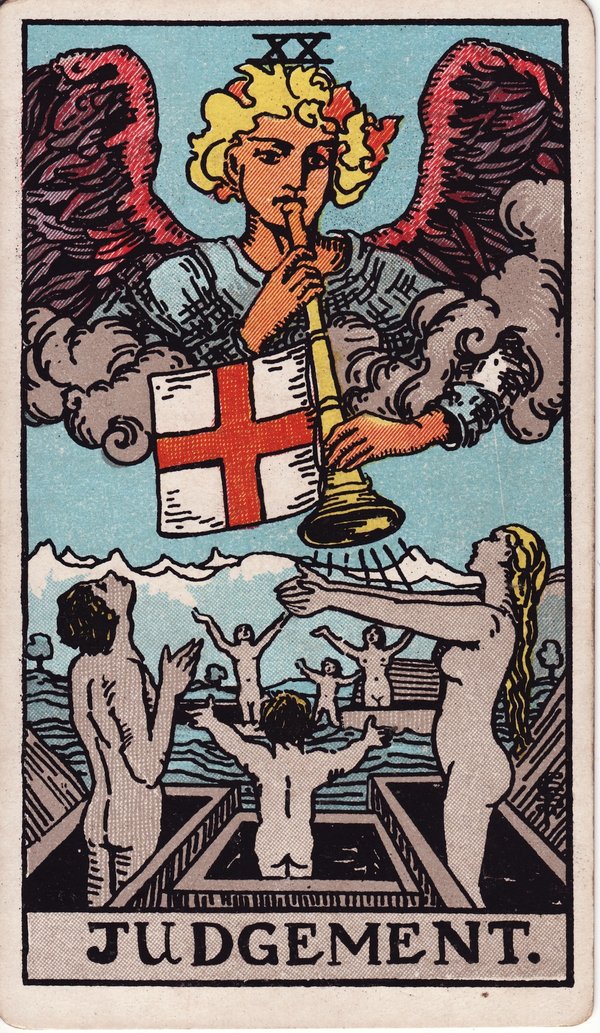
In the Rider-Waite-Smith tradition, Judgement is the card of awakening, reckoning, and rebirth. Archangel Gabriel blows a trumpet, and the dead rise from their graves — not in terror but in hope, arms outstretched toward the sound. This is the Last Judgement of the Book of Revelation, but rendered without the terror. The figures rising are not cowering; they are answering. They are ready.
In a reading, Judgement signals that a period of evaluation has arrived — not an external judgment but an internal one. You are being called to look at your life honestly: what have you done, what have you left undone, what lessons have you learned, what patterns are you still repeating? This is the card of the life review, the midlife reckoning, the moment when you can no longer avoid the question: Have I been living the life I was meant to live?
But Judgement is not only evaluation — it is absolution. The card carries the promise that honest self-assessment, however painful, leads to release. Guilt, regret, shame — these are the graves from which you rise. The trumpet does not condemn. It summons. It invites you to let go of the old verdicts, the old stories, the old identities built around failure, and step into a new life. Judgement is not the end. It is the resurrection.
The emotional register of Judgement is profound relief — the exhale after decades of holding breath, the tears that come when you finally forgive yourself, the lightness of being called and knowing the call is real.
General Meaning: Thoth Aeon
⚠️ THEOLOGICAL DIVERGENCE. In the Thoth tradition, this card is not Judgement — it is The Aeon. Crowley explicitly rejected the Christian framework of the Last Judgment, which he saw as a superstitious simplification. He wrote: "The limitation of this view is the involuntary association to a 'court of law,' to the Christian concept of a 'Resurrection' where the pious may rise and the rest must burn." In its place, he gave us The Aeon: the card of the new cosmic dispensation, the Age of Horus, the crowned and conquering child.
The Thoth Aeon depicts Nuith (the goddess of infinite space, the starry heavens) forming the upper arch of the card, Hadit (the point of consciousness, the winged solar disk) at the center, and Heru-ra-ha (Ra-Hoor-Khuit, the Lord of the Aeon, the crowned child) enthroned below. This is the Thelemic trinity: the infinite container (Nuith), the individual spark (Hadit), and the realized being who unites them (Heru-ra-ha). The old aeon — the Age of Osiris, the dying and resurrecting god, the patriarchal religions — is passing away. The new aeon — the Age of Horus, the eternal child, the liberation of the individual — is being born.
In a reading, The Aeon signals not personal judgment but cosmic shift. Something larger than your individual life is changing, and you are being invited — or compelled — to participate. This is not about whether you've been "good." It's about whether you are aligned with the evolutionary current of your time. The Aeon asks: What age are you living in? What is dying? What is being born? And what is your role in the birth?
The emotional register of The Aeon is awe — the vertigo of standing at the hinge of history, the terror and exhilaration of watching an old world dissolve and a new one coalesce. You are not being judged. You are being summoned into participation. The question is not "am I worthy?" but "will I answer?"
Symbolism & Imagery
Rider-Waite-Smith (1909): Pamela Colman Smith's Judgement depicts Archangel Gabriel blowing a golden trumpet from a cloud. The trumpet bears a red cross banner — the flag of St. George, of victory, of resurrection. Below, grey figures — men, women, and children — rise from rectangular graves, their arms outstretched toward the angel. Their bodies are grey, denoting the liminal state between death and rebirth; they are not yet fully alive, but they are no longer dead. In the background, a mountain range represents insurmountable obstacles and the inevitability of the reckoning — no one escapes the trumpet's call.
The sea in the background may be giving up its dead as well (Revelation 20:13: "the sea gave up the dead that were in it"). The overall composition is vertical: heaven above, earth below, and humanity rising between them. The angel does not descend to earth — the dead rise toward heaven. Salvation is not imposed; it is invited. The figures must choose to rise.
Thoth (Crowley/Harris, 1944): The Thoth Aeon is a complete departure. The card is dominated by three figures representing the Thelemic cosmology:
-
Nuith — the goddess of infinite space, arched across the top of the card, her body the starry heavens. She is the "circumference" of existence, the container of all possibilities. Her presence frames the entire card: everything happens within her.
-
Hadit — the winged solar disk at the center, the "point" of individual consciousness, the spark of the divine in each being. Hadit is the "secret seed" that each soul carries, the irreducible I-ness that is not extinguished even in the dissolution of forms.
-
Heru-ra-ha — the crowned and conquering child, seated below, the Lord of the Aeon. He is Ra-Hoor-Khuit, the active, martial manifestation of Horus, the child who is also the king. He represents the new consciousness being born — not the suffering god of the old aeon (Osiris/Christ) but the triumphant child who knows his sovereignty from birth.
Below these figures, the old forms dissolve. The card is a glyph of transformation that operates at the level of aeons, not individuals. Crowley wrote that this card "represents the formula of the New Aeon" and warned against reading it through the "superstitious" lens of personal judgment. The Thoth Aeon is not about you — it's about the age you live in, and whether you will rise to meet it.
The key difference is theological and absolute: RWS Judgement frames the card within Christian eschatology and personal salvation. Thoth Aeon reframes it as cosmic evolution and individual liberation. The figures in RWS are judged. The figures in Thoth are participating.
Astrological & Elemental Layer
Judgement/The Aeon is Fire — not the martial fire of the Tower or the solar radiance of the Sun, but the fire of transformation, the phoenix flame, the spirit that consumes and renews. This is the fire of Shiva's dance, of the burning bush that is not consumed, of Pentecost (tongues of flame descending). It is the fire that does not destroy but transforms — the alchemical fire that separates the pure from the impure, the essential from the contingent.
In modern astrological attributions, Judgement is associated with Pluto — the planet of death, rebirth, transformation, the underworld, and the forces that tear down to rebuild. Pluto was discovered in 1930, decades after the Golden Dawn's attributions were established, but it fits the card so perfectly that most contemporary readers accept it. Pluto's quality is radical transformation: not improvement, not adjustment, but complete dissolution and reconstitution. You do not remodel a Pluto house. You burn it down and build a new one. Judgement is the Pluto moment — the old self dies, the new self is born, and the trumpet is the midwife.
In the Thoth Aeon, Crowley attributed the card to Jupiter and Saturn in Aquarius — the expansive force of Jupiter (liberation, growth, philosophy) combined with the structuring force of Saturn (discipline, form, the old order) in the sign of the New Age (Aquarius, the Water Bearer, the sign of revolution and collective evolution). This combination suggests that the New Aeon is not chaos but a higher order — the liberation that also structures, the freedom that also forms.
Kabbalistic / Tree of Life Layer
On the Tree of Life, Judgement occupies Path 31, the path connecting Hod (Splendour, the eighth Sephirah, the sphere of intellect, form, and communication) to Malkuth (Kingdom, the tenth Sephirah, the material world). This is the final path of the Personality Triad — the last channel through which consciousness passes before manifesting in the physical plane. Everything that has been understood (Hod) now flows into embodiment (Malkuth). Judgement is the moment when knowledge becomes action, when insight becomes life.
The Hebrew letter Shin (ש) means "Tooth" — the organ that breaks down food for assimilation, the sharp edge that separates what can be nourished from what must be discarded. Shin is also the letter of fire (Esh in Hebrew), the divine presence, and the word Shaddai (the Almighty). In the Sepher Yetzirah, Path 31 is called the "Perpetual Intelligence" — the consciousness that governs the continuous process of creation, destruction, and rebirth. Why should the Perpetual Intelligence rule Judgement? Because judgment is not a one-time event. It is the perpetual process by which the soul evaluates, releases, and renews itself. Every moment is a judgment. Every breath is a resurrection.
For the querent, the Kabbalistic layer suggests: the reckoning you face is not a final exam. It is a recurring process, built into the architecture of being. You are being asked to evaluate your life not because you might fail but because evaluation is how the soul grows. The tooth (Shin) chews experience into nourishment. The fire (Esh) burns what cannot be assimilated. What remains is you — purified, renewed, and moving into the world (Malkuth) with clear eyes.
Archetypal & Life-Stage Themes
Judgement/The Aeon embodies archetypes of reckoning, resurrection, and cosmic transformation:
The Resurrection: The most obvious archetype — the dead rising, the phoenix from ashes, the spring after winter. In Christian terms, the resurrection of Christ and the general resurrection of the dead. In universal terms, the pattern of death-and-rebirth that governs all life. Judgement is the card of the eternal return — not reincarnation but the principle that endings are always beginnings, that every grave is a womb.
The Call / The Vocation: The trumpet is not a judgment; it is a summons. Judgement is the card of being called — to a purpose, a path, a version of yourself that you have been avoiding. In vocational terms, it is the moment when you can no longer pretend you don't know what you're supposed to be doing. The call does not go away. It only gets louder until you answer.
The Phoenix: The mythical bird that burns on its own pyre and rises renewed from the ashes. The phoenix does not wait to be killed — it immolates itself, and in that self-chosen death finds a new life. Judgement/The Aeon is the phoenix moment: the old identity, the old story, the old self must be released — sometimes by choice, sometimes by fire — so that the new can rise.
The New Aeon (Thoth): In Crowley's system, this card represents nothing less than the turning of the ages — the shift from the Aeon of Osiris (the dying god, patriarchal religion, the formula of suffering and redemption) to the Aeon of Horus (the eternal child, individual sovereignty, the formula of self-realization). This is not a personal archetype but a cosmic one. The querent who pulls The Aeon in a Thoth reading is being told: the age itself is changing. Align or resist. Rise or remain in the grave of the old forms.
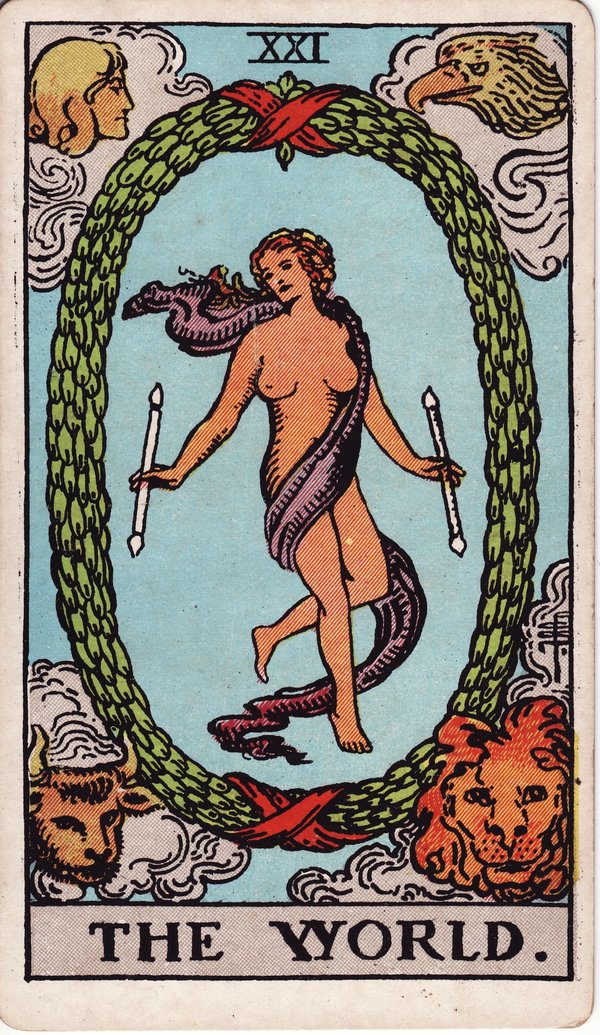
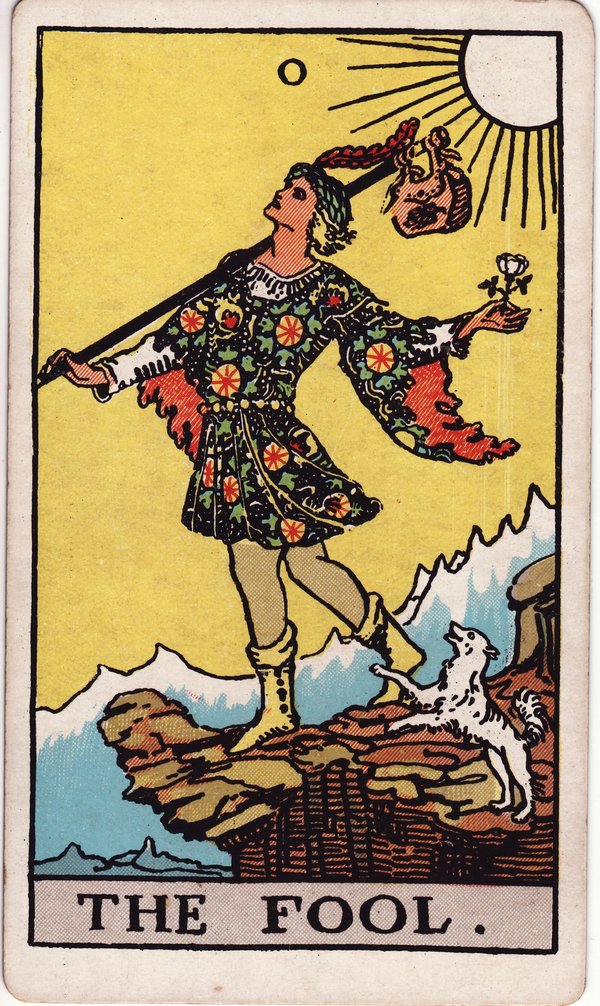
In the Fool's Journey, Judgement is the penultimate card — the final reckoning before the integration of the World. The Fool has journeyed through every stage of human experience — innocence, power, love, crisis, death, hope, darkness, illumination — and now must integrate all of it, must rise from the grave of the journey itself, renewed and whole. This corresponds to the "Resurrection" stage of the monomyth: the hero returns from death, transformed, carrying the elixir.
Advising For / Advising Against
-
If advising FOR: Answer the call. You know what it is. You have been hearing it for months, years, maybe decades — the quiet voice that says this is not all you are, there is more, there is a life you are meant to live. Stop pretending you don't hear it. The trumpet is not going to get quieter. Rise. Forgive yourself — for the failures, the wrong turns, the years you spent asleep. The absolution is waiting. The grave is open. Step out. If reading Thoth: the aeon is changing whether you change with it or not. The question is not whether the old world is ending — it is. The question is whether you will be an agent of the birth or a ghost of the death.
-
If advising AGAINST: Do not let the inner critic wear the mask of the angel. Not every voice of judgment is divine. Not every "calling" is your calling. Ask: is this the trumpet of awakening, or is this the voice of shame, of other people's expectations, of a perfectionism that will never be satisfied? True judgment liberates. False judgment imprisons. If the voice you are hearing makes you feel small, unworthy, and condemned, it is not the angel. It is the accuser. Tell it to be silent. If reading Thoth: do not mistake the chaos of the aeon-shift for personal failure. The structures that are collapsing are not your fault. You are not required to save the old world. You are only required to find your place in the new one.
Card of the Day
Today, something calls you. It may be a memory, a conversation that finally happens, an opportunity that appears with uncanny timing. Listen. You may feel the weight of everything you haven't done, haven't said — but the weight is there to be released, not carried. The question is whether you will hear it as judgment or as invitation. Choose invitation. Rise. Even just enough to see over the edge. The light has been waiting for you.
Card of the Year
A Judgement year — calculated as personal year 20 — is a year of reckoning and rebirth. This is one of the most transformative years in the nine-year cycle. The themes: life review, answering a calling, releasing old identities, stepping into a new version of yourself. You may change careers, end or renew relationships, move, or undergo a spiritual transformation that reorders your entire life. The past comes up for review — not to haunt you but to be integrated and released. The key question of a Judgement year is: Who am I becoming, and what must I release to become it? By year's end, you will not be the same person who entered it. That is the point.
Elemental Dignities Notes
Judgement is Fire — the element of transformation, spirit, and the phoenix flame. In a spread, its elemental relationship to neighboring cards follows the Golden Dawn system:
- Strengthened by Air (Swords): Air supports Fire — clarity feeds the transformative impulse, intellectual honesty supports the self-evaluation. A Judgement adjacent to Swords becomes more precise in its reckoning — the evaluation is sharp, specific, and actionable.
- Strengthened by Fire (Wands): Like element intensifies like element. Multiple Fire cards suggest a complete and rapid transformation — the phoenix rises, and the fire spreads to every area of life.
- Weakened by Water (Cups): Water is Fire's enemy in elemental dignity. The presence of Cups adjacent to Judgement suggests emotional attachments are impeding the transformation — grief, sentimentality, or relational bonds that make it hard to release what needs releasing.
- Neutral / Mixed with Earth (Pentacles): Fire and Earth can work together constructively — the transformation grounds itself in practical reality. Judgement adjacent to Pentacles suggests that the calling will manifest in tangible changes: a new job, a move, a restructuring of material life.
Deck-Specific Notes
-
⚠️ If using a Thoth deck: This card is NOT Judgement. It is The Aeon — and the difference is total. The Thoth Aeon depicts Nuith, Hadit, and Heru-ra-ha representing the Thelemic new aeon of Horus. The Christian resurrection framework is explicitly rejected. Reading this as "personal judgment" in a Thoth context misses the card's entire esoteric function. The Aeon is about cosmic transformation, the death of the old age and birth of the new, and the individual's alignment (or misalignment) with the evolutionary current. Crowley associated this card with the formula of the New Aeon: "Do what thou wilt shall be the whole of the Law." The "judgment" is not about sin and salvation; it is about authenticity and self-realization.
-
If using a Marseille-tradition deck: Le Jugement typically depicts an angel (often Gabriel, sometimes Michael or Christ) blowing a trumpet, with figures rising from graves below. The Marseille Judgement is more explicitly Christian than the RWS version — the angel may hold a sword or scales as well as a trumpet, and the risen figures may include a pope, a king, and commoners, emphasizing the universality of judgment. The Marseille card often carries heavier connotations of finality and divine justice.
-
If using a blended or contemporary deck (e.g., Fountain Tarot, Wild Unknown, etc.): The psychological and astrological layers of this entry apply across visual traditions. The core archetype — awakening, calling, reckoning, rebirth — persists regardless of specific imagery. Most contemporary decks avoid the explicit Christian iconography while preserving the essential meaning. Consult your deck's guidebook for any departures, particularly if the card is renamed.
Journaling & Contemplation Prompts
- What call have I been hearing that I've been pretending not to hear? What would happen if I answered?
- What would I need to forgive myself for — truly, completely — to be free?
- If I stood before my own inner judgment right now, what would the verdict be? Who is speaking that verdict — the angel or the accuser?
- What is ending in my life that I am still holding onto? What is beginning that I am still resisting?
- (Thoth frame) What age am I living in? What is dying in the world around me? What is being born? And what is my role in its birth?
Additional Associations
| Association Type | Value |
|---|---|
| Color(s) | Red (the phoenix fire, the blood of rebirth, the trumpet's call); grey (the liminal, the between-death-and-life, the figures rising from graves); gold (the trumpet, divine announcement, the light of absolution); deep blue (Nuith's starry body in Thoth, the infinite container) |
| Crystals / Stones | Fire Opal (transformation, the phoenix stone, the fire within); Moldavite (intense transformation, cosmic origin, calling); Bloodstone (purification, the resurrection stone, courage to face truth); Obsidian (the mirror of self-evaluation, shadow work) |
| Herbs / Plants | Myrrh (death and rebirth, anointing, the sacred resin of transformation); Frankincense (spiritual awakening, the incense of the temple); Phoenix Palm (the palm that rises from fire, resilience); Yew (the tree of death and resurrection, the churchyard tree, eternal cycles) |
| Archetypes (Jungian) | The Resurrection; The Call (Vocation); The Phoenix; The Self as Integrator; The Judge (in its redeemed form — the wise evaluator, not the accuser); (Thoth) The Aeon-Shifter |
| Mythological Figures | Archangel Gabriel (the messenger, the trumpeter of the apocalypse); the Phoenix (death and rebirth in fire); Osiris (the dying and resurrecting god of the old aeon — Thoth supersedes him with Horus); Heru-ra-ha (the crowned child of the new aeon, Thoth); Nuith and Hadit (the Thelemic trinity, Thoth); Christ of the Second Coming (RWS); Shiva Nataraja (the cosmic dance that destroys and creates) |
| Numerological Resonance | 20 = 10 × 2, the Wheel of Fortune doubled — not just the end of a cycle but the revelation that cycles are the structure of existence. 2 + 0 = 2, the High Priestess's hidden knowledge now made explicit. Shin = 300, the fire of the divine, the spirit that transforms. |
| Playing Card Equivalent | No direct playing card equivalent, but Judgment's qualities of evaluation and transformation connect to various cartomantic traditions that associate the court cards with judgment and decision-making |
| I Ching Hexagram Parallel | Hexagram 49 — Ko / Revolution (Molting). "Revolution. On your own day you are believed. Supreme success, furthering through perseverance. Remorse disappears." The hexagram of radical transformation, the shedding of old skin, the revolution that is both political and personal. The Judgment that is also liberation. |
| Body / Organ Correspondence | The inner ear (the organ that hears the call, balance, the vestibular system); the throat (the voice that answers, the fifth chakra, expression); the entire nervous system (the fire of nerve impulses, the body's electrical grid). Pluto governs the processes of cellular death and regeneration, the hidden intelligence of the body that knows when to destroy and when to rebuild. |
Shadow & Integration Message
Judgement's shadow is not the failure to rise — it is the inner critic that has usurped the angel's trumpet. This is the voice that says you will never be enough, that your failures define you, that the grave is where you belong. It is the judgment that condemns rather than summons, that weighs and finds wanting rather than weighing and finding ready. This shadow can manifest as harsh self-criticism, as judgmentalism toward others, or as the terrified avoidance of any honest self-evaluation because you fear what the evaluation will reveal.
In the Thoth frame, the shadow is "wrong identification" — mistaking the ego's preferences for the soul's calling, aligning oneself with a false aeon, or refusing to participate in the cosmic shift out of fear or attachment to the old forms. The shadow of the Aeon is the fundamentalist who clings to the dying god, the revolutionary who destroys without creating, the "frog perspective" that cannot see the larger pattern.
Integration of Judgement/The Aeon means developing the capacity for honest self-evaluation without harshness, for answering the call without losing discernment, for rising from the grave without denying that the grave was real. The integrated Judgement is the person who can say: I see what I have been. I release it. I become what I am called to be. And then does it.
Elemental Intelligence (Suit Framing)
In the Jungian cognitive function mapping, Judgement as Fire aligns with the Intuitive function and the choleric humour. But Judgement's Fire is the fire of the spirit — not the directed will of the Wands but the vertical flame that connects heaven and earth, the Pentecostal fire that descends, the phoenix fire that arises. It is the choleric humour in its most sublime expression: not anger but transformation, not domination but liberation, not destruction but resurrection.
Judgement's "class" is the prophet, the revolutionary, the midwife of the new — the one who announces what is coming, who calls the dead to rise, who stands at the hinge of history and says: now. Its humour is choleric fire that has been purified into spirit — the flame that no longer burns indiscriminately but alchemizes whatever it touches into gold.
Timing & Manifestation
For timing in a reading, Judgement suggests "unexpectedly, if at all" — the call arrives on its own schedule, not the querent's. In some traditions, Judgement is associated with the entire period from the winter solstice (the rebirth of the sun) through spring (the resurrection of nature), with an emphasis on the period around the spring equinox. Pluto's timing is generational (it takes 248 years to transit the zodiac), so personal Judgement events tend to cluster around Pluto transits — periods of 1-3 years of intense transformation.
In manifestation, Judgement signals that the time has come — not "soon" or "maybe" but "now." The call has been issued. The only variable is your response. "The trumpet has sounded. The dead are rising. Will you be among them?"
Yes / No Tendency
Judgement leans toward Yes — but the yes is a transformation, not a simple affirmation. In a yes/no spread, Judgement says: yes, the door is open, but walking through it will change you. The "yes" of Judgement is not a permission slip; it is a summons. You are being called to rise to something. If you say yes, your life will not be the same.
In reversed / ill-dignified position, the tendency is Not yet — you are not ready to answer. The call has been heard, but fear, doubt, or attachment to the old life is preventing the response. The question is not whether the call is real (it is) but why you are still in the grave when the trumpet has sounded.
Common Misreads / Nuances to Know
Misread 1: "Judgement means God is judging me and I'm going to fail." Judgement is not about external condemnation. The figures on the RWS card are rising toward the angel with open arms, not cowering in terror. The judgment is a reckoning, not a condemnation. It is the moment of honest self-evaluation that leads to liberation, not punishment. If you fear this card, you may be projecting your inner critic onto the divine — and that projection is exactly what Judgement invites you to release.
Misread 2: "The Aeon (Thoth) is just a renamed Judgement — same card, different name." This is entirely wrong. The Aeon represents a complete theological replacement. The Christian eschatological framework (final judgment, resurrection of the dead, heaven and hell) is replaced with a Thelemic evolutionary framework (aeonic shifts, individual sovereignty, the liberation of consciousness). Reading The Aeon as "personal judgment" misses the card's meaning as thoroughly as reading The Lovers as "you will find romance." The scope is cosmic, not personal.
Misread 3: "Judgement reversed means you're condemned." The reversed Judgement is not condemnation — it is refusal. The figure stays in the grave not because they are unworthy but because they are afraid, ashamed, or attached to being dead. The reversed card asks: what is keeping you from rising? The answer is never "God has rejected you." It is always some form of: you have not yet accepted yourself.
⚠️ Nuance for Thoth readers: If you are reading with the Thoth deck, this card is NOT about personal salvation. It is about cosmic evolution. The Aeon asks: what age are you living in, and are you aligned with it? The "court of law" interpretation — guilt, punishment, reward — is explicitly rejected by Crowley as a "superstitious simplification." Read The Aeon as a card of liberation, not judgment; of participation in the new, not evaluation of the old. The figures are not being judged. They are being born.