The Poetic Line
"The snake does not mourn its skin."
Keywords
| Category | Dignified | Undignified |
|---|---|---|
| General | Ending, transformation, transition, release, rebirth, necessary conclusion | Resistance to change, stagnation, fear of endings, clinging, aborted transformation |
| Spiritual | Ego death, spiritual rebirth, the dark night yielding to dawn, initiation into mystery, the phoenix rising | Spiritual stagnation, fear of the void, clinging to dead forms of belief, refusal of the initiatory ordeal |
| Psychological | Letting go of old identities, releasing attachments, completing grief, radical acceptance of impermanence | Inability to let go, prolonged grief, fear of change, psychological rigidity, living in the past |
| Physical Health | Recovery through release, surgery as metaphor for necessary removal, the body's natural cycle of death and regeneration of cells | Chronic illness from held tension, refusal to release what the body needs to release, fear of medical intervention, neglect of the body's cycles |
| Relationships | Ending what needs to end, the death of a relationship phase (not necessarily the relationship), clearing space for new intimacy | Clinging to dead relationships, inability to grieve and move on, fear of being alone, keeping relationships on life support |
| Financial | Cutting losses, ending bad investments, clearing debt, financial reset, inheritance or settlement from an ending | Refusal to declare bankruptcy when needed, throwing money after dead ventures, financial denial, hoarding |
| Vocational | Career change, leaving a job that has died, professional transformation, the end of one career phase and the beginning of another | Staying in a dead-end job, fear of career change, professional stagnation, inability to leave what no longer serves |
| Shadow / Thoth Distinction | The alchemical putrefactio — the stage of the Great Work where the matter rots before it is reborn; the scorpion's sting that kills what must die; the skeleton as that which survives all decay — the eternal beneath the temporal; Saturn's scythe as the necessary severance that enables new growth | Terror of death masking terror of life; the zombie — neither dead nor alive, unable to end and unable to begin; addiction to grief; the scorpion that stings itself; the refusal to compost |
Narrative Description
General Meaning
CRITICAL NOTE: The Death card almost never signifies literal, physical death. This is the most common and most damaging misreading in all of Tarot. When Death appears in a spread, it speaks of endings — the necessary conclusion of a phase, a relationship, a way of being, a chapter of life. It speaks of transformation — the process by which something must end so that something else can begin. It speaks of release — the letting go that makes new growth possible. But it does not predict your demise or the demise of anyone you love. The Tarot is a symbolic language, not a death sentence. Use common sense, and let context be your guide.
In the Fool's Journey, Death arrives after The Hanged Man. The Fool has been suspended, inverted, forced to see differently — and now, what that new perspective has revealed must end. The Hanged Man provided the vision; Death provides the cut. You cannot have the rebirth without the death. The snake cannot grow without shedding its skin. The field cannot produce a new crop without the old crop being harvested or plowed under. Death is not the enemy of life; it is the mechanism of life's renewal.
In a reading, Death signals that something has reached its natural conclusion. This may be a relationship that has run its course, a job that has taught you everything it can teach, a belief system that no longer fits, a phase of life whose season has passed. The ending may be sad or it may be liberating — Death does not specify the emotional register. What it specifies is the necessity of the ending. Whatever is dying was already dead, or was blocking what wants to live. The card's appearance is an invitation — sometimes a demand — to cooperate with the ending rather than resist it.
The emotional register of Death varies by context. When the ending is welcomed — the end of an illness, the departure from a toxic situation — the card carries relief, release, the lightness of a burden dropped. When the ending is grieved — the loss of a love, the closing of a chapter that mattered — the card carries sorrow, but also dignity: the grief that honors what is passing and makes room for what follows. Death does not ask you not to grieve. It asks you not to cling. Grief is the river; clinging is the dam.
The Thoth card deepens the alchemical dimension: Death is not just an ending but the putrefactio — the stage of the Great Work in which the prima materia is allowed to rot, to decompose, so that its essence can be extracted and purified. In alchemy, nothing can be created without the death of the previous form. The gold does not appear from nowhere; it is liberated from the dross through fire and dissolution. When the Thoth Death appears, it asks: What in you is ready to rot so that what is gold in you can be freed?
Symbolism & Imagery
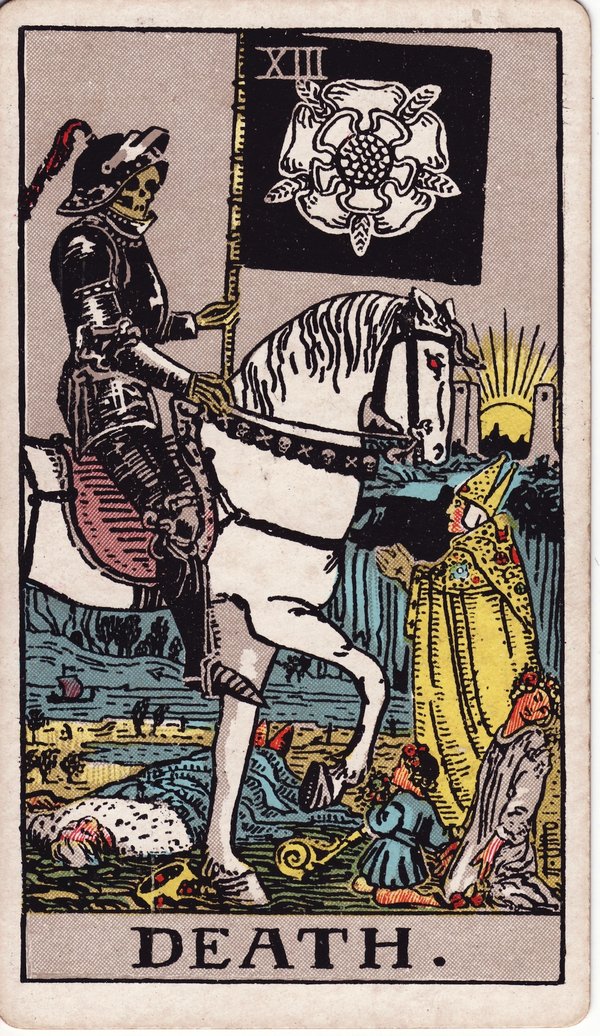
Rider-Waite-Smith (1909): Pamela Colman Smith's Death is one of the most iconic images in the Tarot — and, for those who understand its symbolism, one of the most hopeful. A skeleton in black armor rides a white horse. The skeleton is the part of the body that survives long after the flesh has decayed — the enduring structure beneath the transient form. The black armor is the color of mourning, yes, but also of protection, of invincibility — death cannot be resisted, but neither can it be destroyed. The white horse is purity, power, and the vehicle of transformation — the same white horse that carries the hero, the savior, the conqueror.
In the skeleton's hand is a black flag emblazoned with a white, five-petaled rose. The rose is purity and immortality — the same white rose carried by the Fool at the beginning of the journey. The five petals are the number of change, of the pentagram, of the human form with arms and legs outstretched — the number that signals transformation. Together, the black flag and white rose declare: there is beauty in death, and it is an inherent part of being alive.
Before the horse, four figures react to Death's approach. A king lies dead on the ground — temporal power cannot resist this force. A young woman kneels, pleading — youth and beauty are not spared. A child offers flowers — innocence does not protect. A bishop in golden vestments raises his hands in prayer — even spiritual authority must bow. Death comes for everyone, regardless of status, age, virtue, or power. This is not cruelty; it is the great equalizer, the one force that treats all lives as equally precious by treating all lives as equally finite.
In the background, the sun rises — or sets — between two towers (the same twin towers seen in The Moon card). It is impossible to tell whether this is dawn or dusk, and the ambiguity is intentional: every ending is also a beginning, depending on which direction you face. A boat floats on a river — the mythological ferry that carries souls to the afterlife, but also the vessel of transition, the journey that every ending initiates.
Thoth (Crowley/Harris, 1944): Lady Frieda Harris's Death for the Thoth deck is a swirling, transformative mandala rather than a narrative scene. A skeleton crowned with the headdress of Osiris wields a great scythe — Saturn's instrument of harvest and severance. The skeleton is not grim; it is active, dancing almost, caught in the motion of transformation. It is the Lord of the Dance of Death, the Shiva who destroys to create.
Around the skeleton, the waters of dissolution churn — the scorpion, the serpent, and the eagle emerge from the foam, representing the three stages of Scorpio's metamorphosis. The scorpion is the lowest form: the stinging, defensive creature that kills what threatens it. The serpent is the intermediate form: the wisdom of the life force that sheds its skin, the kundalini rising through the chakras. The eagle is the highest form: the transcendent vision that sees from above, the phoenix that rises from the ashes. Death in the Thoth system is the force that propels transformation through all three stages.
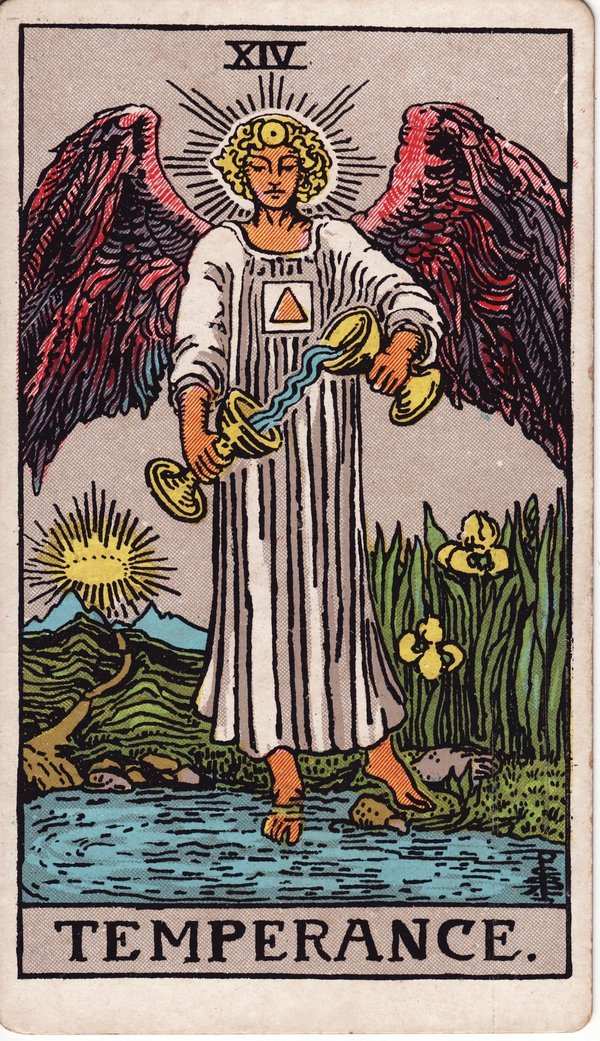
Bubbles and seeds float in the churning water — the sperm and eggs of new life, the forms that are generated in the very act of dissolution. The entire composition is a visual statement of the alchemical principle: solve et coagula — dissolve and recombine. Death is the dissolving. The Art (Temperance) is the recombination.
Key difference between traditions: RWS Death is a narrative: the Grim Reaper arriving, the reactions of the living, the ambiguity of sunrise/sunset. Thoth Death is a process: the churning, the transmutation, the emergence of new forms from old dissolution. RWS says: something is ending. Thoth says: something is ending AND something is being born in the same motion — and you are that something.
Astrological & Elemental Layer
Death is assigned to Scorpio, the eighth sign of the zodiac, traditionally ruled by Mars and in modern astrology by Pluto. Scorpio is the sign of fixed water — water that does not flow horizontally but descends vertically, into the depths, into the underworld, into the regions where what is hidden becomes visible and what is toxic is either purged or poisons from within.
Scorpio is the sign of the three metamorphoses: scorpion (defensive, stinging, the creature of the desert floor), serpent (wise, shedding, the creature that renews itself through release), and eagle/phoenix (transcendent, visionary, the creature that rises from the fire of its own destruction). Every Scorpio transit contains the potential for all three levels. The question the Death card poses is: at which level are you experiencing this ending? Are you the scorpion, stinging everything that approaches because you are terrified? Are you the serpent, shedding the skin that no longer fits? Or are you the eagle, already seeing the landscape from the height that the ending will give you?
Pluto, Scorpio's modern ruler, is the planet of the underworld, of power, of the unconscious, of the forces that operate beneath the surface of awareness. Pluto transits are slow, deep, and irreversible — they tear down what is false and leave only what is real. When Death appears in a reading, it carries Pluto's implacability: the ending is not negotiable. What you can negotiate is how you meet it — with terror and resistance, or with the dignity of surrender to a process larger than your preferences.
The traditional rulership of Mars adds the dimension of the cut: Mars is the sword, the scalpel, the decisive action that severs. Death's Mars-in-Scorpio energy is the surgeon removing the tumor, the warrior delivering the merciful kill — it hurts, and it heals. The cut is clean, even when the grief is messy.
In the Thoth system, the additional Saturnian attribution (Saturn as lord of the 8th house) deepens the theme of necessary endings. Saturn is the planet of limits, boundaries, time, and the wisdom that comes from accepting finitude. Saturn in Death says: this ending is not a punishment. It is the natural boundary of the form. All forms have limits. All seasons end. Wisdom is knowing when the season has turned and acting accordingly.
Kabbalistic / Tree of Life Layer
On the Tree of Life, Death occupies Path 24, the path connecting Tiphareth (Beauty, Harmony, the integrated self, the Christ-center) to Netzach (Victory, Endurance, the instincts, the life force of nature). This is the path of Nun — the fish that swims in dark waters — the channel through which the harmonious self is sacrificed to the renewal of life.
Tiphareth is the sixth Sephirah — the sphere of the Sun, of the heart, of the self that has achieved integration and consciousness. It is the most beautiful and balanced point on the Tree — but it is not the end. On the other side of Tiphareth lies the Abyss, and beyond it the supernal triad of the divine. But below Tiphareth lies Netzach — the seventh Sephirah, the sphere of Venus, of nature, of the instincts, of the ceaseless, undirected life force that cares nothing for the individual ego's preservation.
The path from Tiphareth to Netzach is the path of the ego's death into the greater life. The integrated self, having achieved its harmony, must now be offered back to the source — not as destruction but as compost. The individual flower dies so that the soil is enriched for the next season's bloom. This is the path of Nun: the fish that is eaten so that the eater may live, the life that continues by consuming life.
The Sepher Yetzirah describes this path as the "Imaginative Intelligence" — the consciousness that forms images of all created things, that sees the pattern beneath the forms. Death is imaginative: it is the capacity to see the form that will replace the current form, to imagine the rebirth while the death is still occurring. This is the function of the artist, the visionary, the person who can hold the grief of the present ending and the vision of the future beginning in the same awareness.
For the querent, the Kabbalistic layer suggests: the ending you are experiencing is not random. It is the path of Nun — the necessary dissolution of the individual form into the collective life force, so that the life force can create anew. What feels like your death is actually your participation in the renewal of life. The self that dies was always going to die; the self that emerges from its composting will be more aligned with the life force than the self that feared dissolution.
Archetypal & Life-Stage Themes
Death embodies the archetype that every human culture has had to reckon with: the Grim Reaper, the Harvester of Souls, the Lord of the Underworld. But the Tarot's Death is more nuanced than the fear-soaked imagery of popular culture.
The Reaper / Harvester: The skeleton with the scythe is not a monster — it is a farmer. The scythe harvests what is ripe. The crop is not murdered; it is gathered, at the right time, when it has fulfilled its purpose. The Reaper archetype asks: Has this phase of your life ripened? Has it fulfilled its purpose? Is it time for the harvest — even if the harvest feels like an ending?
Hades / Pluto: The lord of the underworld is not evil; he is the guardian of the realm of the dead, the keeper of the treasures buried in the earth — the seeds that wait in darkness, the minerals that form under pressure, the roots that anchor the visible tree. Hades is the archetype of the necessary descent: what goes underground is not destroyed; it is stored, transformed, prepared for return. The seed in the soil looks dead to the surface eye. It is not dead. It is germinating.
The Phoenix: The bird that builds its own funeral pyre, is consumed by the flames, and rises from the ashes. The phoenix is the archetype of self-initiated transformation — the death that is chosen, not merely suffered. When Death appears, it asks: Are you willing to light the fire yourself, or will you wait for the fire to find you?
Shiva Nataraja: The Hindu Lord of the Dance, who dances the universe into and out of existence. Shiva's dance is not destruction in the Western sense — it is the eternal rhythm of creation, preservation, and dissolution, the three phases of every form's existence. Death in this frame is not an ending but a movement in the dance — the turn that makes the next step possible.
In the Fool's Journey, Death is the midpoint crisis — the moment when the accumulating weight of the journey (the loves, the powers, the structures, the beliefs) becomes so heavy that the only way forward is to let most of it go. The Fool who began the journey with a light bindle and a white rose has accumulated armor, partnerships, titles, and debts. Death strips all of that away — not to punish the Fool but to remind them that they are still, fundamentally, the one who walks. Everything else is temporary.
In cultural and mythic parallels: Persephone's descent to the underworld and her seasonal return — the myth that encodes the agricultural cycle of death and rebirth. Osiris, dismembered by Set and reassembled by Isis — the god who dies and is reborn as lord of the underworld. Jesus in the tomb — the three days of death that precede resurrection. The caterpillar in the chrysalis — the creature that literally dissolves into goo before reorganizing as a butterfly.
Advising For / Advising Against
-
If advising FOR: Let it go. Whatever is ending, let it end. The relationship, the job, the identity, the phase, the belief — it has served its purpose, and holding on will only prolong the pain and delay the rebirth. Grieve fully — Death does not ask you to skip the grief. But grieve with the awareness that grief is the river that carries you to the next shore, not the shore itself. Cooperate with the ending. Clear out what is dead — the clutter, the commitments, the self-concepts — and notice how much space you have for what wants to live. The phoenix does not rise despite the fire; it rises because of the fire. Let the fire do its work.
-
If advising AGAINST: Do not mistake a temporary difficulty for a permanent ending. Not every conflict is a death; not every winter is the extinction of spring. Ask yourself: Am I ending this because it is truly finished, or because ending it is easier than facing what it asks of me? Do not burn down the house because one room needs renovation. And do not use "transformation" as a euphemism for destruction that you have not thought through. Real death is sacred; symbolic death should be treated with the same gravity. Before you end something, make sure you have honestly asked whether it might be renewed instead.
Card of the Day
Today marks an ending — or the beginning of your awareness of an ending that has already occurred. You may feel the impulse to cling, to resist. Let it go instead. Identify one thing — a resentment, an attachment, a habit — and consciously release it. The grief you feel today is not a problem to solve. Walk through it.
Card of the Year
A Death year — calculated as personal year 13 when your birth month + birth day + current year reduces to 13 — is a year of profound endings and transformations. This is the year when the structures that have been weakening for years finally collapse, when the relationships that have been on life support finally end, when the identity that no longer fits finally falls away.
This is not an easy year. It is a year of grief, of letting go, of the empty space where something used to be. But it is also a year of liberation. What dies was already dead, or was killing you. The ending, however painful, is the beginning of your freedom from what was not serving your life.
The themes of a 13/Death year: major life transitions (career change, relocation, divorce, empty nesting), the completion of long-running projects or conflicts, encounters with mortality (your own or others'), the stripping away of what is not essential. The challenge is to let the endings be endings — not to rush into the new beginning before the grief has done its work. The seed that is planted in the dark does not see the sun. It does not need to. It needs to trust the darkness, and grow.
Elemental Dignities Notes
Death is Water — the element of emotion, the unconscious, dissolution, and transformation through immersion. In a spread, its elemental relationship to neighboring cards follows the Golden Dawn system:
-
Strengthened by Water (Cups): Like element intensifies like element. Additional Water cards deepen the emotional and transformative dimension — Death alongside Cups becomes a profound emotional purge, a grief that cleanses, an ending that is felt to the marrow. The risk is drowning — becoming so immersed in the ending that the beginning cannot be seen.
-
Strengthened by Earth (Pentacles): Earth supports Water — the material dimension provides a container for the transformation. A Death adjacent to Pentacles suggests the ending has practical, tangible dimensions — a move, a career change, a financial reset — and that the material world will support the transition.
-
Weakened by Fire (Wands): Fire is Water's enemy in elemental dignity. Wands adjacent to Death suggest that the impulse to act, to initiate, to start the new thing immediately is disrupting the necessary process of dissolution. The fire boils the water before it has finished its transformative work. Let the ending complete before you rush to the beginning.
-
Neutral / Mixed with Air (Swords): Air and Water can be productive if balanced — the intellect helping to name and understand the grief, the mind finding meaning in the loss. But too much Air overanalyzes the ending, turning grief into a problem to solve rather than an experience to undergo.
Deck-Specific Notes
-
If using a Thoth deck: Death appears as a dancing skeleton crowned with the headdress of Osiris, wielding a scythe amid churning waters from which the scorpion, serpent, and eagle emerge. The reading emphasis shifts from "an ending is occurring" to "a transformation is in progress — and you are the matter being transformed." The Thoth Death is explicitly alchemical — the putrefactio stage of the Great Work. The card asks not just what is ending? but what is being born from the rot?
-
If using a Marseille-tradition deck: La Mort (Death) is typically depicted as a skeletal figure wielding a scythe, often with body parts scattered on the ground — heads, hands, feet — emphasizing the indiscriminate nature of death and the way it reduces all to their common elements. The Marseille Death is more stark, more medieval, more directly about physical mortality. The spiritual interpretation (transformation, rebirth) was developed by later occultists — though the seeds are present in the image's very starkness, which forces the question: if this is what death looks like, what matters while we are alive?
-
If using a blended or contemporary deck (e.g., Fountain Tarot, Wild Unknown, etc.): The psychological and astrological layers apply across visual traditions. The core archetype — necessary ending, transformation, rebirth — persists regardless of imagery. Consult your deck's guidebook for specific departures, particularly regarding whether the card leans more toward the Grim Reaper framing (fear, inevitability) or the phoenix framing (transformation, liberation).
Journaling & Contemplation Prompts
- What in my life is already dead but I am still carrying? What am I holding onto that has already ended?
- If I knew — truly knew — that this ending was making space for something I cannot yet see, how would I meet it differently?
- What am I most afraid of losing? What does that fear tell me about what I most need to release my attachment to?
- Where in my life have I been the scorpion (defensive, stinging)? Where have I been the serpent (shedding, renewing)? Where have I been the eagle (rising, seeing from above)?
- What wants to be born from the ashes of what is burning? If you could not fail, what would you let die?
Additional Associations
| Association Type | Value |
|---|---|
| Color(s) | Black (mourning, the void, the fertile darkness from which all life emerges); white (purity, the bones that remain, the essence beneath the form); deep red/maroon (the lifeblood, the passion that death transforms but does not extinguish); silver-gray (the color of ghosts, of what has passed but lingers) |
| Crystals / Stones | Obsidian (the stone of the underworld, volcanic glass formed in fire, used for shadow work and cutting through illusion); Smoky Quartz (grounding through grief, transmuting negative energy); Malachite (the stone of transformation, associated with death and rebirth in Egyptian tradition); Jet (fossilized wood, the literal death of a tree turned to gemstone — the beauty that time makes of endings) |
| Herbs / Plants | Yew (the tree of death and resurrection, associated with graveyards and immortality — it lives for millennia); Cypress (the tree of mourning, planted in cemeteries across Mediterranean cultures); Pomegranate (Persephone's fruit, the seed that binds the living to the underworld, the sweetness that grows from descent); Wormwood (bitterness, the herb of endings, associated with the star that fell in Revelation) |
| Archetypes (Jungian) | The Grim Reaper; The Transformer; The Phoenix; Hades / Pluto; Shiva the Destroyer; The Shadow (the part of the self that must be acknowledged and integrated through symbolic death) |
| Mythological Figures | Hades (lord of the underworld); Persephone (the one who descends and returns); Osiris (dismembered and resurrected); Shiva Nataraja (the cosmic dancer who destroys to create); The Valkyries (choosers of the slain, who carry heroes to Valhalla); Anubis (guide of souls through death to judgment) |
| Numerological Resonance | 13 = 1 + 3 = 4 — stability through transformation, the new foundation built on cleared ground. 13 as the disruption of 12 (the completed zodiac) — the necessary break in the circle that allows the spiral to continue. In many traditions, 13 is the number of death and the number of the Goddess (13 lunar months in a solar year). |
| Playing Card Equivalent | The Death card has no direct playing-card equivalent, but thematically it connects to cards of severance and ending — the moment when the game turns, when the hand that seemed won is lost, when the king falls. |
| I Ching Hexagram Parallel | Hexagram 49 — Ko / Revolution (Molting). "On your own day you are believed. Supreme success. Furthering through perseverance. Remorse disappears." The hexagram of radical change, of shedding the old skin, of revolution that clears the way for renewal. Like Death, it signals that the time for the old order has passed — and that what replaces it will be aligned with the deeper pattern. |
| Body / Organ Correspondence | The colon and excretory system (the body's mechanism for eliminating what is waste, what has been processed and must be released — death as elimination); the reproductive organs (Scorpio's rulership — the cycle of death and birth embodied in the organs that generate new life); the immune system (the body's mechanism for identifying and destroying what no longer serves the whole). In astrological medicine, Scorpio governs the genitals, the bowels, and the processes of elimination and regeneration. |
Shadow & Integration Message
Death's shadow is the refusal to die — and its twin, the fascination with death that becomes a refusal to live. The first form is more common: the querent who clings to what is already gone, who keeps the dead relationship on life support, who refuses to grieve because grieving feels like admitting the ending is real. This is the zombie card — neither dead nor alive, the querent wanders in a half-life of unprocessed endings, unable to fully inhabit the present because part of them is still tethered to the past.
The second form is rarer but more dangerous: the querent who becomes so identified with the Death archetype that they court endings, burn down relationships preemptively, mistake destruction for transformation. This is the scorpion that stings indiscriminately, the phoenix who sets fires that didn't need to be set. The shadow of Death can become an addiction to crisis — the unconscious belief that only through violent rupture can change occur.
In the Thoth framing, the shadow appears as the scorpion that stings itself — the transformation that turns inward and becomes self-destruction. Or as the skeleton frozen mid-dance — the initiation that was begun but not completed, the death that was entered but not followed through to rebirth.
Integration of Death's energy means learning to let endings be endings — neither rushed nor resisted, neither courted nor denied. The integrated Death is the one who can sit with grief without drowning in it, who can release what is gone without forgetting what it meant, who can trust the void without needing to fill it immediately. This is the skeleton who dances because death is not the enemy of life but its partner — the one who clears the floor for the next dance.
Elemental Intelligence (Suit Framing)
In the Jungian cognitive function mapping — which maps the suits to Jungian cognitive functions, humours, and class theory — Death as Water aligns with the Feeling function, but specifically with the transformative dimension of Feeling: the capacity to let emotional experience dissolve the self and reconstitute it at a deeper level. This is not the pleasant feeling of contentment but the harrowing feeling of grief that cleanses, the emotional fire (Water in Scorpio is paradoxically fiery) that burns away what is false.
The "class" of Death is the undertaker, the grief counselor, the surgeon, the compost-maker — those whose social role is to facilitate necessary endings, to tend the boundary between life and death, to transform what is decaying into what will nourish new life. Its humour is phlegmatic turned to the extreme of melancholia — not depression but the productive melancholy that alchemists called the nigredo, the blackening, the necessary stage of decomposition before purification.
In the Jungian cognitive function mapping, Death as Water-fixed (Scorpio is a fixed Water sign) represents the depth that does not flow — the pool that holds everything, the still water that reflects the truth because it is not disturbed. This is Water that does not run but digests, that absorbs and transforms, that takes the dead matter of the psyche and converts it into the soil of wisdom.
Timing & Manifestation
For timing in a reading, Death suggests an ending that occurs within Scorpio season (approximately October 23 – November 21) or during a significant Scorpio transit (Mars or Pluto in Scorpio, a Scorpio lunar eclipse, the Sun transiting the 8th house of the querent's natal chart). The third decan of Scorpio (approximately November 12–21, ruled by Venus) carries a particular Death resonance — the sweetness that can be extracted from endings, the beauty that survives transformation.
More broadly, Death's timing is the timing of natural cycles: the ending will occur when the form has reached its limit, not when the calendar says it should. Like the fruit that falls when it is ripe, the ending cannot be scheduled — but it can be sensed. Pay attention to what is already loosening, what is already showing signs of decay, what your body already knows is over even if your mind hasn't accepted it yet. Those are the indicators of Death's approaching arrival.
Yes / No Tendency
Death leans toward a No — something must end before anything can begin. This is not a final, permanent no; it is a no-for-now, a no-to-the-current-form, a no that clears the way for a deeper yes. The question you are asking presupposes a continuity that Death says is not available. Before what you want can manifest, something must be released. Identify what needs to end, and the answer may shift.
In reversed / ill-dignified position, the tendency shifts toward stagnation — the no persists because the querent is resisting the necessary ending. The situation cannot move forward because the past has not been released. The reversal is an invitation to do the Death work that has been avoided: grieve, release, clear, compost.
Common Misreads / Nuances to Know
Misread 1: "Death means someone is going to die." NO. This is the most damaging misreading in all of Tarot, and readers have a responsibility to correct it every time. The Death card speaks of symbolic endings and transformations — the death of a phase, a relationship, a way of being. It does not predict literal, physical death. Anyone who tells you otherwise is either inexperienced, irresponsible, or both. The Tarot is a symbolic language; read it symbolically.
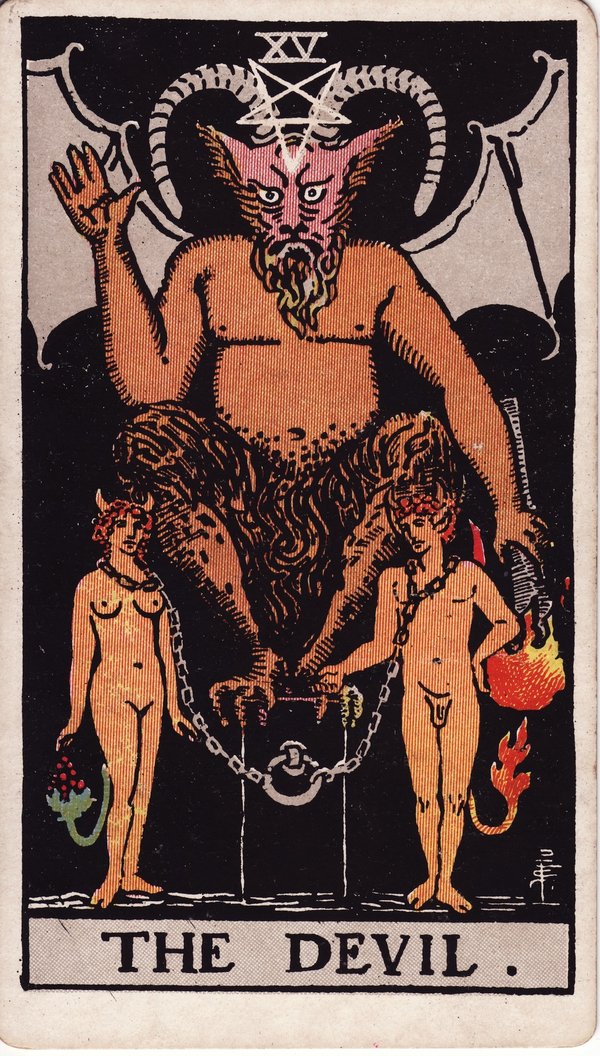
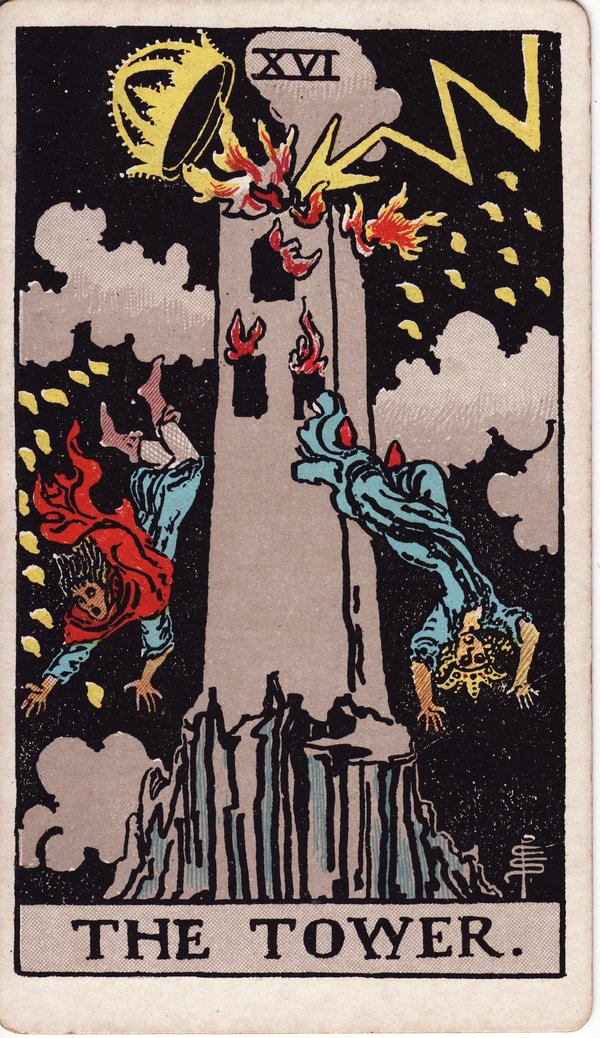
Misread 2: "Death is the scariest card in the deck." In many ways, Death is one of the most hopeful cards. It promises that the current pain will not last forever, that what is stuck will move, that what is dead will fall away so that what is alive can breathe. The Tower is scarier — sudden, violent, unpreventable collapse. The Devil is scarier — the chains you don't even see. Death is honest, clean, and ultimately kind: it does not lie about what is happening, and it clears the way for what comes next.
Misread 3: "Reversed Death means the death is avoided — good news!" Sometimes, but more often the reversal indicates that the necessary ending is being resisted — and resistance to Death is more painful than Death itself. The surgery that is delayed becomes a crisis. The relationship that should have ended becomes a decade of quiet misery. The reversal is a warning: you are prolonging the inevitable, and the cost of prolonging it is higher than the cost of accepting it.
Nuance for Thoth readers: The Thoth Death is the putrefactio — the alchemical stage of decomposition that is necessary for the extraction of the essence. This is not an ending in the sense of "something is over"; it is a process in the sense of "something is being broken down so that its gold can be separated from its dross." Read with the Thoth deck, the card's question shifts from "what is ending?" to "what is being extracted?"