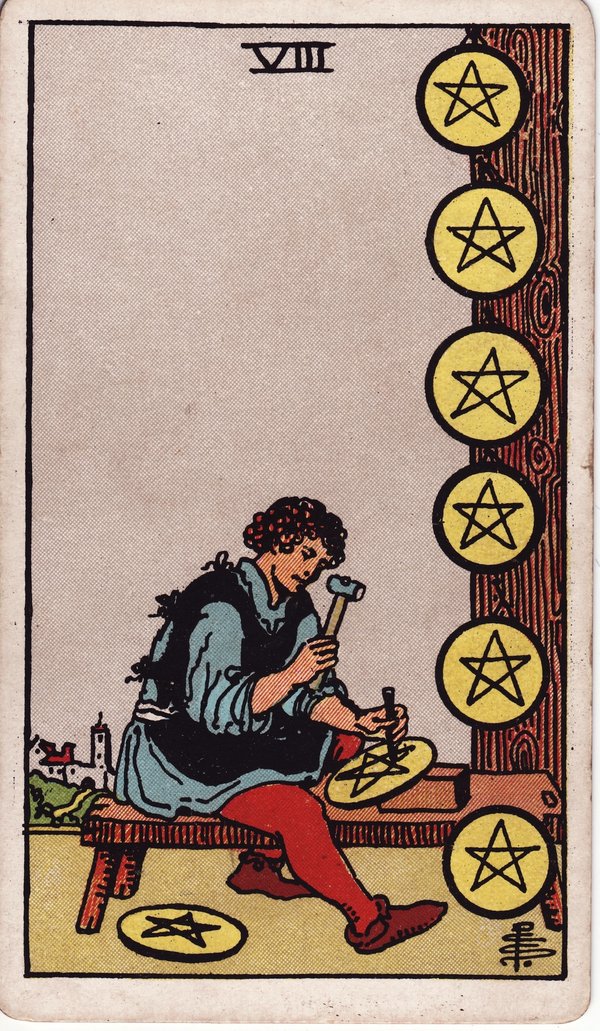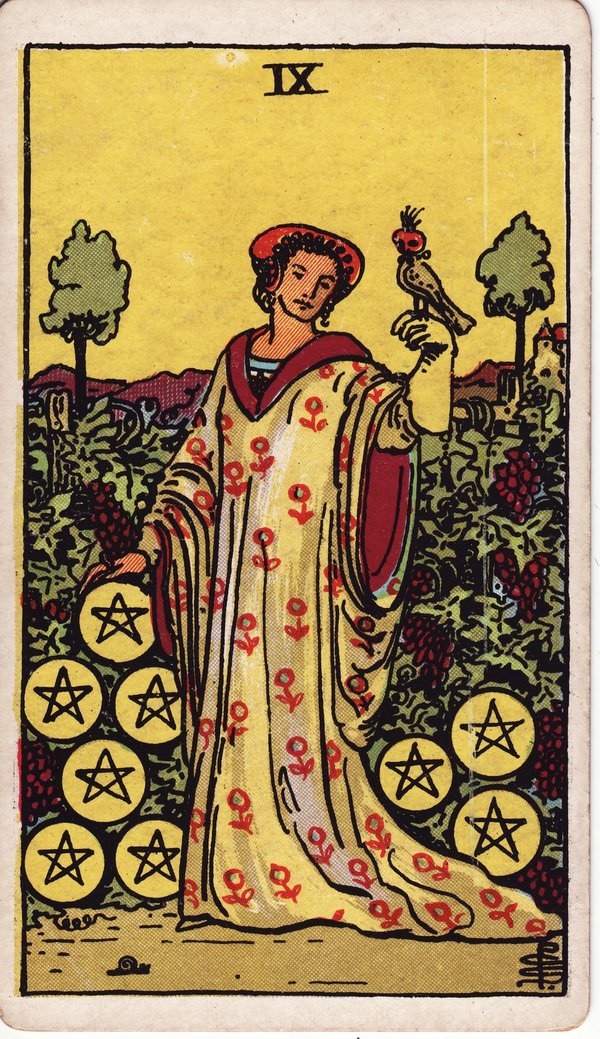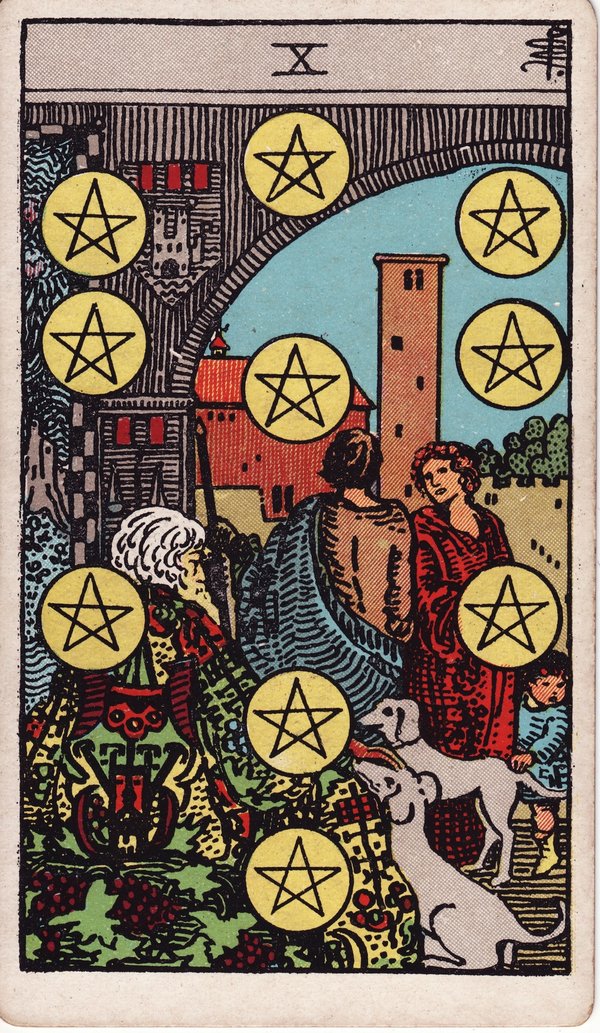
The Poetic Line
"You planted, you watered, and now you wait. The harvest does not need your worry — only your faith in what you have already done."
Keywords
| Category | Dignified | Undignified |
|---|---|---|
| General | Patience, assessment, long-term investment, taking stock, perseverance, honest evaluation | Impatience, wasted effort, poor returns, giving up too soon, regret, dissatisfaction with progress |
| Spiritual | Trusting divine timing, spiritual inventory, faith in the unseen growth, the pause as sacred | Spiritual dissatisfaction, demanding signs of progress, abandoning the path before fruit appears, resentment toward the divine |
| Psychological | Reflective evaluation, delayed gratification, growth mindset, honest self-appraisal, perseverance through uncertainty | Frustration at slow progress, comparing your chapter one to someone's chapter twenty, self-criticism that paralyzes, rumination on sunk costs |
| Physical Health | Monitoring long-term health investments, patience with recovery, steady progress, sustainable practices | Ignoring warning signs out of impatience, abandoning health regimens before results appear, chronic fatigue from over-effort |
| Relationships | Evaluating relationship growth, asking whether investment is mutual, patience with a partner's pace, honest check-in | Resentment over unequal effort, staying in a relationship hoping it "pays off," giving up just before a breakthrough, scorekeeping |
| Financial | Long-term investment, compound growth, portfolio review, patience with returns, assessing ROI | Get-rich-quick mentality, abandoning a sound investment too early, financial regret, throwing good money after bad |
| Vocational | Career assessment, deciding whether the work aligns with values, patience with professional growth, honest appraisal of trajectory | Job-hopping out of impatience, staying in a dead-end role hoping it improves, dissatisfaction without action, burnout from unrecognized labor |
| Shadow / Thoth Distinction | Saturnine discipline, the weight of time as teacher, slow mastery through repetition, the dignity of unfinished work | The "failure" that is not failure but premature judgment, the tyranny of expectations, bitterness in the waiting, the despair of the long middle |
Thoth note: Crowley's title "Lord of Failure" is deliberately provocative and should not be read as condemnation. In the Thoth system, "failure" here refers to the Saturnine experience of limitation and delay — the moment when material effort appears to produce nothing because the results are still invisible underground. This is not failure but the alchemical nigredo: the blackening stage that precedes transformation, the necessary dissolution of unrealistic expectations so that real fruit can form. A Thoth-influenced reading emphasizes the spiritual discipline of waiting without guarantees, and the Saturnine wisdom that what appears stalled may in fact be gestating.
Narrative Description
General Meaning
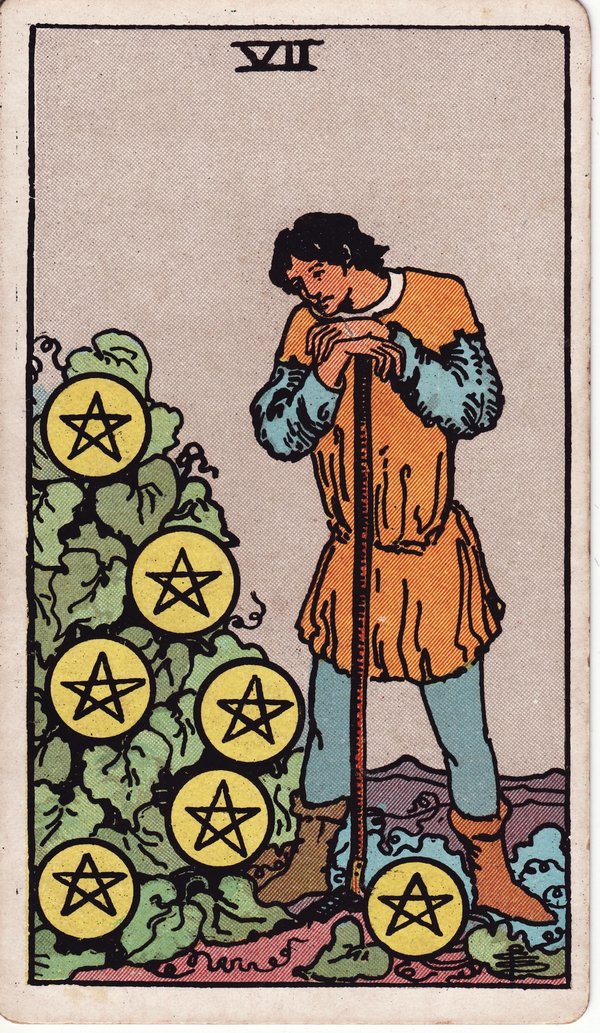
The Seven of Pentacles is the card of the long pause — the moment when the initial burst of effort is behind you and the results are not yet in sight. In the RWS image, a farmer leans on his hoe, gazing at a vine heavy with pentacles that has grown from his labor. He is not harvesting. He is not planting. He is assessing — and the expression on his face is ambiguous. Is it satisfaction? Disappointment? The question mark baked into the card is its entire meaning.
This card appears when the querent is at a crossroads of evaluation. Something has been invested — time, love, money, energy — and the returns are unclear. The Seven of Pentacles does not announce failure; it announces uncertainty, which is often more difficult to bear. It is the card of the second year of a business, the middle of a degree program, the phase of a relationship where the initial chemistry has settled and the real work has begun. The energy is Saturn in Taurus: slow, weighted, demanding patience, insisting on substance over speed.
For the querent, the Seven of Pentacles asks: Is what you are building worth continuing? And if it is, can you tolerate the discomfort of not knowing when — or whether — it will pay off? This is not a card of action but of reflection. The farmer does not chop down the vine. He does not walk away. He stands and looks. The standing and looking is the work.
Symbolism & Imagery
Rider-Waite-Smith (1909): Pamela Colman Smith's composition centers on a young farmer in a simple tunic, leaning on his hoe or staff, staring at a lush vine that has grown to chest height and bears seven golden pentacles. One pentacle rests on the ground near his feet — perhaps fallen, perhaps placed there deliberately as a question. His posture is neither triumphant nor defeated; it is contemplative, the body language of someone taking inventory. His hands rest on the staff and his weight shifts — he has stopped working, and in that cessation, the entire drama of the card unfolds.
The vine is healthy and vigorous — the pentacles are not withered or sparse. Whatever he has been doing, it has produced real growth. The problem is not the harvest but the harvester's relationship to it. Does he see abundance, or does he see what should have been more? The sky behind him is a neutral, earthy tone — no blazing sun of triumph, no storm clouds of disaster. This is ordinary time, the unglamorous middle of the cycle, and that ordinariness carries the card's essential truth.
The ground is tilled and bare around the vine — he has worked this soil, and the evidence of his labor is visible. The six pentacles on the vine correspond to the previous numbers of the suit, the work that has come before; the seventh, at his feet, suggests the present moment — the pause before the next cycle.
Thoth (Crowley/Harris, 1944): In the Thoth deck, the Seven of Disks is dramatically different from the RWS pastoral. Titled "Failure," the card shows seven leaden-colored disks arranged in a pattern that suggests the Tree of Life's geomantic figure of Rubeus — a figure associated with passion, intensity, and the danger of over-ripening. The disks are dark and heavy; the background is a murky, troubled blue-green, suggesting the stagnation of Saturn. The central disk is marked with the geomantic character of Rubeus in red. Around the disks, sickly yellow-brown leaves curl — the foliage that once fed the fruit now decays.
Crowley writes that this card represents "the fading of the earthly hope" and warns against confusing the cessation of growth with permanent failure. The Thoth Seven of Disks is about the disappointment that comes when material effort does not yield the expected spiritual or emotional return — when the work has been done but the soul is still hungry. The heavy Saturnine pressure of Taurus in its third decan (the decan of endings, exhaustion, and the dissolution of form) saturates the imagery. Yet hidden in the darkness is the alchemical truth: lead is the prima materia, the base metal from which gold is transmuted. "Failure" is the Nigredo — the black stage that is not the end but the beginning of the real work.
The key difference between traditions: RWS emphasizes the pause — the reflective moment of assessment. Thoth emphasizes the emotional weight of that pause — the despair that can arise when patience has been extended past its natural limit and the fruits have not yet appeared. Both are true. The Seven is where hope meets the ache of uncertainty.
Astrological & Elemental Layer
The Seven of Pentacles carries Saturn in Taurus — one of the most weighted, slow-moving, and materially serious combinations in the decan system.
Saturn is the planet of limitation, discipline, time, karma, and the long lesson. Saturn does not give quickly; it withholds so that we may deepen. Saturn in any astrological placement tends to delay, test, and refine — it asks whether we want the thing badly enough to wait for it, whether we are willing to do the work when the reward is not visible. In the decan system, the third decan of any sign is ruled by Saturn in the Chaldean sequence, which means the third decan always carries an element of heavy finality — the close of the sign's expression before the transition to the next.
Taurus is the fixed Earth sign — sensuous, stable, patient, possessive, and deeply resistant to change. Taurus energy builds slowly and permanently. It wants tangible results, physical security, and the comfort of knowing the harvest is real. When Saturn enters Taurus, the combination doubles down on slowness: Saturn wants to teach and delay, Taurus wants to hold and possess. The result is a card that embodies the agony and dignity of waiting for material results that cannot be rushed.
The third decan of Taurus (approximately May 11–20) carries the additional Saturnine rulership that makes this the most "heavy" of the Taurus decans. The Taurus qualities of steady, patient growth are intensified by the Saturnine demand for endurance and the recognition of limits. This decan corresponds to the final phase of spring — the moment when the initial verdancy of the season must prove it can sustain itself into the long summer. The crops are in the ground, the rain has fallen, and now there is nothing to do but wait and watch.
The elemental layer further nuances this: Pentacles is Earth, which governs the material realm — body, money, work, home, the physical world. Earth energy is by nature patient; it does not rush because it cannot be rushed. The Seven of Pentacles, as Earth in its Saturn-in-Taurus expression, is the card of material patience — the long, unglamorous investment of time and energy that builds lasting value. It is the farmer's year, not the speculator's hour.
Kabbalistic / Tree of Life Layer
The Seven of Pentacles sits in Netzach, the seventh Sephirah on the Tree of Life — the sphere of Victory, Endurance, and the emotional-instinctual nature. Netzach is Venus-ruled, belonging to the Pillar of Mercy, and represents the force of desire that drives all manifestation. It is the persistence of the heart — not the mind's strategy (Hod) but the body's stubborn, hungry, creative will to continue.
In the Sephirothic arc of the numbered cards, the Seven represents a critical turn. The Ace through Six build the structure of the suit's energy — from seed (Ace/Kether) to harmony (Six/Tiphareth). The Seven (Netzach) introduces an emotional-intuitive complexity that the earlier numbers lack. If the Six is the moment of equilibrium and beauty, the Seven is the moment when that equilibrium must prove it can sustain itself through the raw, un-idealized force of desire. In Pentacles/Earth, this means: can the material work continue when the initial inspiration is gone and only the daily labor remains?
Netzach's Venusian energy is what keeps the farmer standing in the field. It is not intellectual conviction that sustains him; it is the irrational, bodily attachment to the vine he planted, the desire to see what it becomes. This is the Netzach paradox: Victory comes not from strategic brilliance but from the refusal to stop — the sheer persistence of the life force insisting on its own continuity.
The path forward is to Yesod (the Eight), where Netzach's raw persistence is refined through the intellect and craft of Hod — the disciplined skill that turns endurance into mastery. But the Seven itself is not yet about refinement; it is about staying. The Sephirothic teaching of this card is that endurance is itself a form of creation — that standing still, in full awareness of uncertainty, is an act of making.
Sequential Narrative: Position in the Suit Story
The Seven of Pentacles occupies a pivotal position in the suit's narrative arc — the turning point where the momentum of accumulation pauses for the first serious reckoning.
From the Six of Pentacles (Lord of Success): The Six of Pentacles (Taurus 2nd decan, Moon) is the card of generosity, distribution, and the flow of resources — giving and receiving in balance. After the Six's open-handed circulation of wealth, the Seven introduces the necessary question: What have I built that is mine to keep? The flow outward must be balanced by the inward assessment. Where the Six was about relationship to others through material means, the Seven turns the gaze inward — it is the self facing the evidence of its own work. The shift from Moon (Six) to Saturn (Seven) is the movement from emotional generosity to structural rigor — from feeling abundant to proving that the abundance has roots.
Toward the Eight of Pentacles (Lord of Prudence): The Seven's assessment naturally leads toward the Eight, where the response to the evaluation takes form. If the Seven reveals that the work is worth continuing, the Eight is where the sleeves are rolled up and the craft deepens — the move from reflective pause to dedicated, skillful labor. If the Seven reveals that the current path is not yielding, the Eight offers the alternative: redirect the effort, learn a new skill, begin again with better technique. The Seven is the question; the Eight is one possible answer.
The overall arc: The Pentacles suit tells the story of material creation — from the Ace's pure potential, through the labor and exchange of the middle numbers, to the legacy and accumulated wealth of the Ten. The Seven is the moment of crisis in this story — the point where the initial faith (Two), collaboration (Three), stability (Four), hardship (Five), and generosity (Six) must either prove themselves sustainable or reveal themselves as insufficient. It is the suit's dark night, not of disaster but of doubt — the honest, uncomfortable question that every builder must eventually ask: Is this worth it?
Advising For / Advising Against
-
If advising FOR: Stop and take stock. The work is not failing — it is unfinished. Give yourself permission to pause, to assess honestly, to notice what has grown and what hasn't. Patience is not passivity; it is the active choice to trust the process even when the process is invisible. The Saturnine discipline you need now is not harder work but clearer sight — the willingness to look at what you have built and ask whether it aligns with what you actually want.
-
If advising AGAINST: Do not abandon the field because the harvest is slow. Do not mistake the natural pause of all growth cycles for failure — not everything that is quiet is dead. Beware the temptation to compare your behind-the-scenes labor with someone else's finished display. And if you are genuinely evaluating whether to continue, do so with the long view: Saturn's timeline is measured in seasons, not hours. What looks stalled may simply be deepening its roots.
Card of the Day
Today asks you to pause and take honest stock. Not with self-criticism — with curiosity. Whatever you have been building — a project, a relationship, a skill, a life — deserves the dignity of your reflection. Step back from the doing and simply look. Notice what has grown that you haven't acknowledged. Notice what hasn't grown that you expected. Don't make any decisions today. Just look. The clarity of honest assessment is itself a harvest.
Card of the Year
The Seven of Pentacles as a year card — whether appearing in a yearly spread or as a recurring theme — signals a year of evaluation and patient waiting. This is not a year of dramatic breakthroughs but of steady, unseen growth. The work you did in previous years is taking root, and this year will test your ability to trust that process. Career plateaus, relationship reassessments, and financial audits are all in the energetic field. The challenge is to avoid the twin traps of abandoning ship too early or staying with a sinking ship out of stubbornness. Saturn's lesson this year is that time is not your enemy — it is your teacher. By year's end, you will know, with far greater clarity than you do now, what is worth your continued investment and what is ready to be released.
Elemental Dignities Notes
The Seven of Pentacles is Earth — the element of body, matter, stability, and physical manifestation. In a spread, its elemental relationship to neighboring cards follows the Golden Dawn system:
- Strengthened by Earth (Pentacles) and Water (Cups): Like element intensifies like element. Multiple Earth cards deepen the material, patient quality — the assessment becomes more grounded and practical. Water cards support Earth (Water nourishes Earth) — Cups adjacent to the Seven bring emotional depth to the evaluation, helping the querent feel what the numbers alone cannot convey.
- Weakened by Air (Swords): Air is Earth's enemy in elemental dignity. Swords cards adjacent to the Seven suggest that over-analysis is interfering with the patient, organic process. The mind wants answers the body is not ready to give. The reflective pause of the Seven can degenerate into anxious rumination when Air dominates.
- Neutral with Fire (Wands): Fire and Earth have a neutral-to-friendly relationship. Fire can warm Earth into fertility, but too much Fire can bake Earth into barrenness. Wands adjacent to the Seven may indicate impatience — the desire to rush the harvest — or creative energy that can be channeled into the waiting period.
Deck-Specific Notes
-
If using a Thoth deck: The Thoth Seven of Disks ("Failure") should be read with an understanding of Crowley's deliberate provocation. The title "Failure" refers not to personal inadequacy but to the Saturnine experience of limitation — the heavy, leaden feeling of a cycle that has not yet completed. The geomantic figure Rubeus adds a layer of intense, almost volcanic passion beneath the surface. A Thoth-influenced reading of this card emphasizes the alchemical process: lead is the precursor to gold. The "failure" is a stage, not a verdict.
-
If using a Marseille-tradition deck: In Marseille decks, seven coins are typically arranged in balanced geometric patterns, often with a vine or floral motif. The lack of a figurative scene shifts the interpretive weight to the number seven and its relation to the suit of Coins. The Marseille Seven of Coins emphasizes the archetypal pause more abstractly — the moment when the initial accumulation of coins (3+3+1 in many layouts) creates a structural question about completeness and direction.
-
If using a blended or contemporary deck: The core themes of assessment, patience, and the long middle are universal across visual traditions. Consult your deck's guidebook for any departures from the RWS/Thoth framework, particularly regarding astrological attributions or the symbolic vocabulary used to represent the pause between effort and reward.
Journaling & Contemplation Prompts
- What am I currently waiting for — and what is the waiting teaching me that the having never could?
- If I were to honestly assess the return on my investment of time, energy, and love in the area that most concerns me, what would I discover? What would I rather not see?
- Where in my life am I tempted to abandon something not because it is failing but because the middle is uncomfortable?
- Am I dissatisfied with what has actually grown — or with what I expected would have grown by now? Can I distinguish between the disappointment of reality and the tyranny of expectation?
- What would I need to believe to trust that the quiet season is not wasted but necessary?
Additional Associations
| Association Type | Value |
|---|---|
| Color(s) | Earth tones — ochre, umber, olive green; muted gold (the pentacles); deep brown (the soil, Saturn's weight); in Thoth — leaden grey, murky blue-green, sickly yellow-brown |
| Crystals / Stones | Smoky Quartz (grounding during uncertainty, patience); Hematite (Saturnine strength, endurance); Moss Agate (growth in the unseen, agricultural abundance) |
| Herbs / Plants | Comfrey (the bone-healer, patience in recovery); Oak (slow growth, deep roots, Saturn's tree); Potato (the harvest hidden underground, invisible growth) |
| Archetypes (Jungian) | The Farmer (patience, cyclical wisdom, the long view); The Assessor (the part of the Self that evaluates); The Steward (caretaking what is not yet fully ripe) |
| Mythological Figures | Sisyphus (the dignity of repeated effort); Demeter during her search (grief-stricken pause before the return of Persephone); Job (tested by Saturnine deprivation, waiting for restoration) |
| Numerological Resonance | 7 = introspection, the spiritual pause within the material cycle. Seven days of creation, seven planets of the ancients, seven chakras — the number of completion within a cycle, but completion that requires a pause to acknowledge. In the Sephiroth: Netzach, the sphere of persistence — Victory through endurance. |
| Playing Card Equivalent | 7 of Diamonds — a card of financial assessment and the small but meaningful gains that accumulate over time |
| I Ching Hexagram Parallel | Hexagram 5 — Hsu / Waiting (Nourishment). "Waiting. If you are sincere, you have light and success. Perseverance brings good fortune. It furthers one to cross the great water." The hexagram of patience before the right moment, of waiting with trust rather than anxiety. |
| Body / Organ Correspondence | Bones (Saturn's domain — the slowest-growing tissue, the structure that outlasts all else); the skeletal system (the body's architecture, built over years); knees (Taurus-ruled, the joints that bear our weight and allow us to pause mid-stride) |
Shadow & Integration Message
The Seven of Pentacles' shadow is not laziness — it is the paralysis of premature judgment. The farmer who, seeing no fruit on day one, decides the soil is barren. The investor who sells at the first dip because the waiting is too painful. The partner who leaves not because the relationship is broken but because the middle is harder than the beginning.
More subtly, the shadow includes the worship of sunk cost — the refusal to abandon a failing project because too much has been invested, and the prospect of "wasted" effort is unbearable. This is the mirror of the first shadow: in one case, we abandon too early; in the other, we stay too long. Both are failures of honest assessment.
Integration of the Seven's energy means developing the capacity for what might be called patient discernment — the ability to stand in the field, look at what has grown, and make a genuine evaluation without the distortion of impatience or stubbornness. The integrated Seven knows that "not yet" is not the same as "no," and that "let go" is not the same as "failed." It can distinguish between the discomfort of the long middle (which requires endurance) and the quiet certainty that a season is complete (which requires release).
Elemental Intelligence (Suit Framing)
In the Jungian cognitive function mapping — which maps the four suits to Jungian cognitive functions, humours, and class theory — Pentacles aligns with the Sensation function, the melancholic humour, and the productive/merchant class. Sensation is the cognitive function that perceives reality through the senses, values the tangible and the measurable, and builds understanding through direct, concrete experience.
The Seven of Pentacles as Sensation in its reflective mode represents the moment when the sensor's accumulated data — the feel of the soil, the weight of the fruit, the visual evidence of growth — must be assembled into a judgment. This is not the intuitive leap of Wands nor the intellectual analysis of Swords; it is the grounded, bodily knowing that comes from having spent enough time in the field to recognize what a healthy crop looks like. The melancholic humour, associated with Pentacles, tends toward carefulness, deliberation, and a certain mournful wisdom — qualities that make the Seven's pause both natural and necessary.
The class framing of the Pentacles suit as the productive class (merchants, artisans, farmers) places the Seven of Pentacles in the position of the quarterly review, the agricultural assessment, the craftsman's inspection of his own work. It is the moment when the builder steps back and asks whether the foundation will hold.
Timing & Manifestation
For timing in a reading, the Seven of Pentacles maps to the third decan of Taurus, approximately May 11 to May 20. When appearing in a timing position, this card suggests a timeframe of approximately one to several months — long enough for a slow process to show meaningful progress, but not so long that the question becomes abstract. Saturn's influence suggests that events will unfold on their own schedule and cannot be hurried; however, the Saturn-in-Taurus placement also implies that the delay is structural, not punitive — the time is being used productively.
In manifestation work, the Seven of Pentacles cautions against impatience. The seed has been planted. The energetic work is done. Now the material realm requires time to respond. Trusting this timeline is itself a form of magical discipline. The pause is not stagnation — it is the necessary gestation period before birth.
Yes / No Tendency
The Seven of Pentacles leans toward "Not yet — pause and reassess." This is fundamentally a card of suspension, not decision. In a yes/no context, it rarely means a hard no — but it also rarely means an immediate yes. The answer is: the conditions for a yes have not yet been met, or the question itself may need refinement. If the querent is asking whether an investment will pay off, the Seven says: It could, but the timeline is longer than you expect, and you must honestly evaluate whether you are willing to wait. If asking whether to walk away, the Seven says: Not until you have truly looked at what you have built and made a clear-eyed assessment.
In reversed / ill-dignified position, the tendency shifts toward "You may be expecting too much, too soon" — not a no so much as an invitation to adjust expectations, to release the attachment to a specific timeline, or to acknowledge that the cost of continuing may now outweigh the potential reward.
Common Misreads / Nuances to Know
Misread 1: "The Seven of Pentacles means failure." This reading borrows too literally from Crowley's Thoth title without understanding its alchemical context. In most traditions, the Seven is not about failure but about assessment — the necessary pause before the next phase. The appearance of this card is not bad news; it is an invitation to consciousness. Even in Thoth, "Failure" names a stage, not an endpoint.
Misread 2: "The Seven means your hard work is paying off." While the pentacles on the vine do indicate growth, this card is fundamentally ambivalent. It can appear when results are positive but also when the return has been disappointing. The card's gift is not reassurance but honesty — it compels the querent to look directly at reality, whatever that reality may be.
Misread 3: "You should walk away." The Seven does not inherently counsel abandonment. It counsels looking. The decision to continue or release comes after the looking, not before. Imposing a decision on this card misses its essence: it is the question mark, not the period.
Nuance for Thoth readers: In the Thoth tradition, the word "Failure" is best understood as a technical term within the alchemical framework — the failure of the prima materia to immediately yield gold, the necessary corruption that precedes purification. The Thoth Seven of Disks often appears when a spiritual or creative block is actually a precondition for breakthrough, and the suffering of the waiting period is a sign that the work is penetrating beyond the superficial.