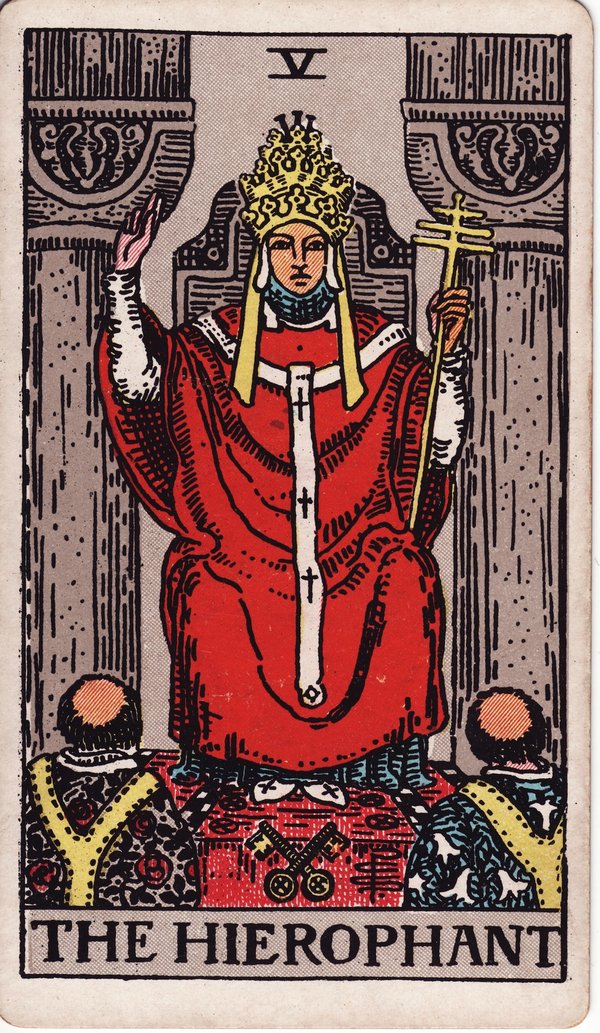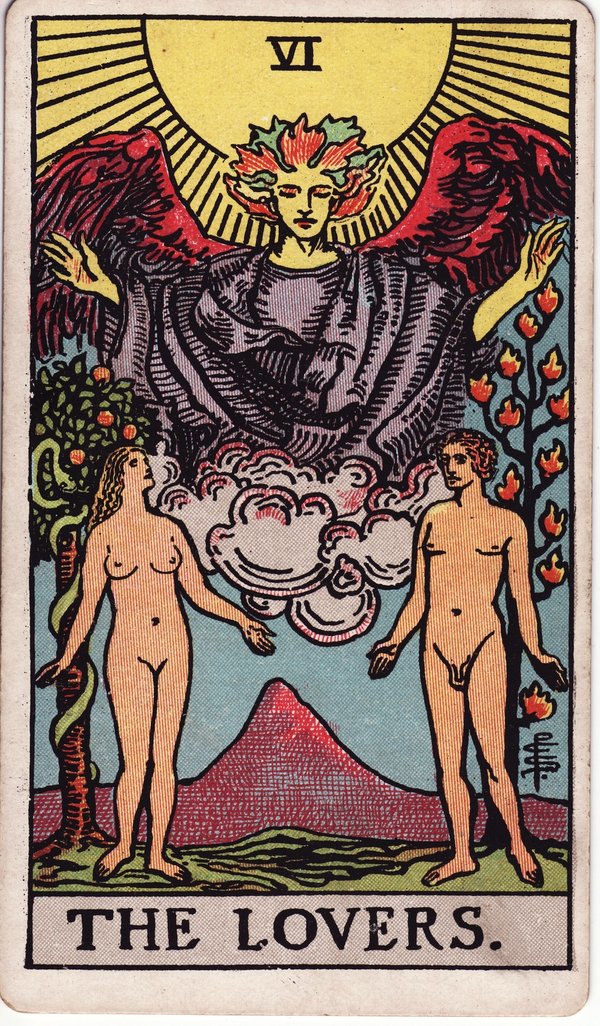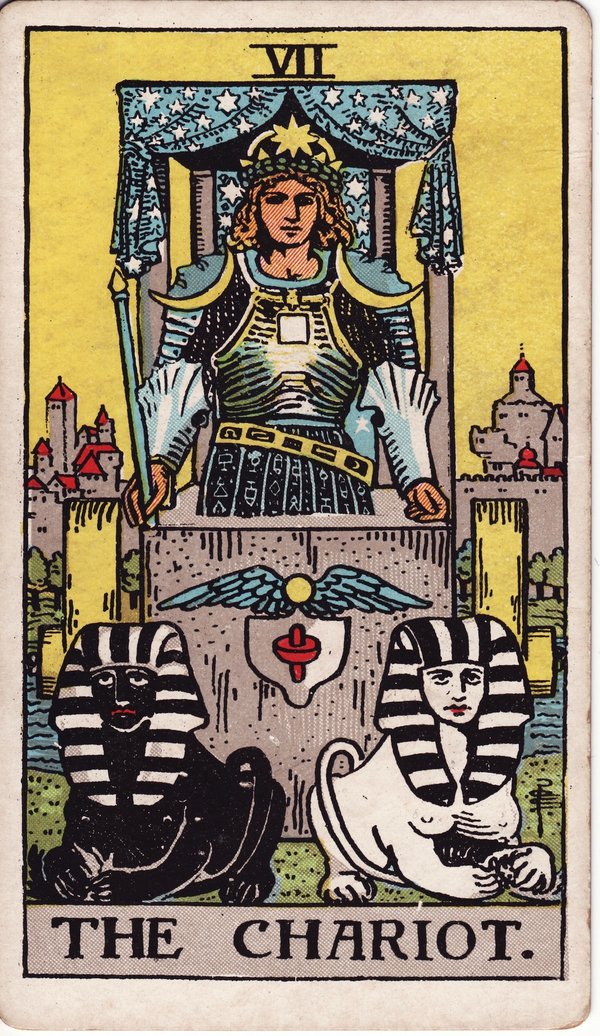
The Poetic Line
"The crown sits heavy only on the head that forgot it serves."
Keywords
| Category | Dignified | Undignified |
|---|---|---|
| General | Authority, structure, leadership, stability, protection, discipline, fatherhood, sovereignty | Tyranny, rigidity, abuse of power, micromanagement, weakness disguised as control, the absent father |
| Spiritual | Sacred order, the divine law-giver, structure as spiritual practice, disciplined devotion, the father aspect of the divine | Dogmatic rigidity, spiritual authoritarianism, using religion to control, the god who demands obedience without offering love, empty ritual without soul |
| Psychological | Self-discipline, emotional regulation, healthy boundaries, executive function, the inner father, mature authority | Inner critic as tyrant, repression of emotion, fear of vulnerability, the child still fighting the father, imposter syndrome in leadership, authoritarian personality |
| Physical Health | Disciplined health regimen, structural integrity of the body (bones, spine), vitality through order, recovery through routine | Stress-related illness from overwork, rigidity manifesting as physical tension, ignoring body's limits through force of will, the heart attack of the executive who never rests |
| Relationships | Protective partnership, clear roles and expectations, stability and commitment, the father as loving authority, providing security | Controlling relationship, the dictator at home, emotional coldness disguised as strength, the partner who rules but does not love, unequal power dynamics |
| Financial | Financial discipline, strategic investment, building long-term wealth, resource management, the responsible steward | Financial tyranny, using money to control others, hoarding resources, risk aversion that prevents growth, the miser |
| Vocational | Executive leadership, management, government, the military, law, structural engineering, any field requiring order and authority | The toxic boss, bureaucratic obstruction, Peter Principle leader promoted beyond competence, using position to bully, the "company man" who has lost his soul |
| Shadow / Thoth Distinction | The Emperor as Tzaddi: the fish-hook that draws sustenance from the depths — authority earned through experience, the leader who has been tested and found worthy; Sun in Capricorn — the radiance of consciousness expressed through the discipline of form | The Emperor as shadow Tzaddi: the hook that ensnares rather than feeds — authority that drains rather than empowers; the tyrant whose structure is built on fear; in Thoth terms, Netzach-to-Yesod corrupted — instinct without higher direction, the astral realm weaponized for control |
Narrative Description
General Meaning
The Emperor is the card of order, structure, and sovereign authority. He is the fourth card of the Major Arcana, completing the first quaternity: the Fool (potential), the Magician (will), the High Priestess (intuition), and now the Emperor (structure). After the Empress's fertile abundance, the Emperor arrives to build fences, establish laws, and ensure that what has been created can be sustained. He is the archetypal Father — not the biological father necessarily but the principle of paternal order: the one who provides, protects, and establishes boundaries.
Numbered 4, the Emperor represents the stability that follows creation. If the Empress is the garden, the Emperor is the wall around it — the structure that makes sustained growth possible. Without walls, the garden is vulnerable to predation. Without the Emperor, the Empress's abundance has no container. The two cards are not opposites but complements: the Mother who nurtures life and the Father who protects it.
In a reading, the Emperor signals that structure, discipline, and authority are relevant to the situation. This may mean the querent needs to step into a leadership role, establish clearer boundaries, or bring order to a chaotic situation. Alternatively, it may signal the presence of an authority figure — a boss, a father, an institution — whose influence must be reckoned with. The Emperor asks: Who is in charge here, and by what right?
The emotional register of the Emperor is steadiness, resolve, and a certain gravitas — the feeling of a mountain that does not move, a decision that has been made and will be executed, a promise that will be kept. There is no sentimentality in this card. The Emperor loves through protection and provision, not through soft words or emotional availability. For querents who crave warmth and flexibility, the Emperor can feel harsh. For those who need structure and clarity, he is a profound relief.
In the Thoth tradition, the Emperor carries the additional weight of the Tzaddi attribution. Tzaddi means "fish-hook" — the instrument that draws sustenance from hidden depths. The Thoth Emperor is not merely the enforcer of existing order but the one who fishes for the rightness beneath convention, who draws up from the unconscious the principles that should govern conscious life. Combined with the Sun in Capricorn, this is authority illuminated by consciousness — not blind tradition but radiant structure, order that knows why it exists.
Symbolism & Imagery
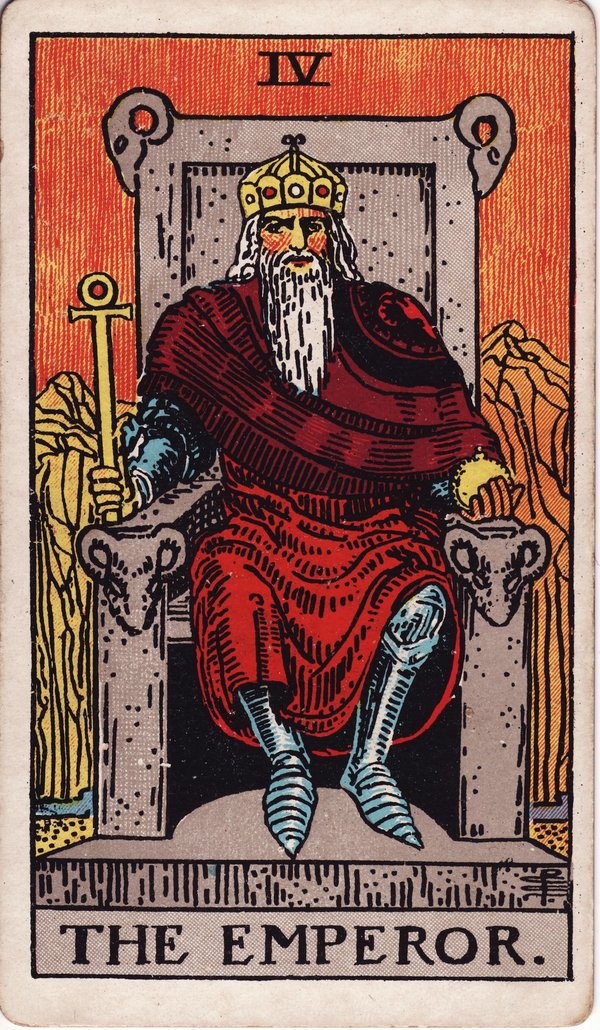
Rider-Waite-Smith (1909): Pamela Colman Smith's Emperor sits on a stone throne adorned with four rams' heads — connecting him to Aries, the ram, the first sign of the zodiac and the sign of Mars, the warrior planet. The stone of the throne is significant: unlike the Empress's cushioned seat, the Emperor's throne is hard, unyielding, built to last. This is authority that does not bend.
In his right hand he holds an ankh, the Egyptian symbol of life — suggesting that true authority serves life, that the ruler's ultimate purpose is to ensure the flourishing of what he governs. In his left hand he holds an orb, the world he rules, held firmly but not crushed. He wears a red robe (power, passion, the energy of Mars) over armor (preparedness, protection, the willingness to defend). A long white beard marks him as an elder — authority rooted in experience, not mere ambition.
Behind him rise tall, barren mountains — the hard places, the challenges that tests leadership, the heights that the Emperor has climbed or must climb. A small stream flows beneath the peaks — the emotional life that the Emperor keeps contained, present but regulated, the feeling that is not denied but channeled into appropriate forms.
Thoth (Crowley/Harris, 1944): Lady Frieda Harris's Emperor for the Thoth deck is a figure of solar radiance — less the stern patriarch and more the illuminated sovereign. The Tzaddi attribution shifts the card's energy: the fish-hook suggests a leader who draws wisdom from the depths, who governs not by decree alone but by insight. The Thoth Emperor is often depicted in relationship to the Lamb (Aries) and the Eagle (the alchemical fixed air, higher vision), suggesting the synthesis of initiatory fire and transcendent perspective.
The key difference between traditions: RWS emphasizes established authority — the Emperor as the one who has already built the kingdom and now rules it. Thoth emphasizes earned authority — the Emperor as Tzaddi, the one who has hooked wisdom from the depths and built structure from it. In the RWS system, Heh (Window) suggests the Emperor as the aperture through which divine law enters the world — he is a channel for order, not its source. In the Thoth system, Tzaddi (Fish-hook) suggests the Emperor as active seeker — the one who draws order up from the unconscious rather than receiving it from above.
Astrological & Elemental Layer
The Emperor is governed by Aries, the first sign of the zodiac, ruled by Mars. Aries is cardinal fire — the principle of initiative, courage, and direct action. It is the sign of the pioneer, the warrior, the one who clears the forest to build the first settlement. Aries energy is impatient with complexity, allergic to indecision, and driven by a fundamental conviction that action is better than inaction.
Mars, the planetary ruler of Aries, adds the dimension of combativeness, assertion, and the willingness to fight for what matters. The Emperor as Aries/Mars is the leader who does not merely issue orders from behind a desk but who rides at the head of the army. His authority is not delegated — it is personally embodied and personally defended.
The elemental assignment is Fire — the element of will, passion, initiative, and transformation. Fire gives the Emperor his drive, his decisiveness, his willingness to act. Fire's shadow is destruction — the Emperor must remember that fire can warm or burn, that authority can protect or consume. An undignified Emperor is fire without a hearth: the tyrant who burns his own kingdom.
The Zodiac Swap (Critical Context): In the RWS/Golden Dawn system, the Emperor receives Aries as his zodiac sign, which is consistent with his role as the initiator of order. In the Thoth system, Crowley counterchanged Aries and Aquarius between the Emperor and the Star. The practical effect: the RWS Emperor is more purely the Arian warrior-king; the Thoth Emperor carries Aries with an undercurrent of Aquarian vision (the society the Emperor builds should serve a higher ideal, not merely perpetuate power). This is a subtle but significant shift that experienced readers working across traditions should hold in awareness.
Kabbalistic / Tree of Life Layer
The Emperor's position on the Tree of Life depends on which letter attribution is used:
RWS/Golden Dawn (Heh, Path 15): Chokmah (Wisdom) to Tiphareth (Beauty). This path channels the creative, initiatory wisdom of Chokmah directly into the heart center, Tiphareth — the sphere of consciousness, harmony, and the Christ-consciousness. The Emperor as Heh on this path is the descent of divine wisdom into human order — the law that is not arbitrary but reflects a cosmic pattern. Heh as "window" captures this function perfectly: the Emperor is the window through which divine order becomes visible in human society.
Thoth (Tzaddi, Path 28): Netzach (Victory/Instinct) to Yesod (Foundation/Astral). This path connects the sphere of instinctual, emotional force (Netzach) to the sphere of the astral matrix and the foundation of personality (Yesod). The Emperor as Tzaddi draws the raw power of instinct up into structured form — he channels the creative fire of Netzach into the stable foundations of Yesod. Tzaddi as "fish-hook" captures this function: the leader who draws sustenance and guidance from the deep waters of the unconscious and uses them to build the structures of conscious life.
The Hebrew letter Tzaddi is traditionally associated with righteousness — the tzaddik in Jewish mysticism is the righteous person, the one whose life is aligned with divine law. The Thoth Emperor as Tzaddi is thus the righteous ruler — not merely the powerful ruler but the one whose power is aligned with a higher justice. Tzaddi = 90, the number that in gematria is associated with Melech (King) — the Emperor as Tzaddi is the king who earns the title, not merely inherits it.
Archetypal & Life-Stage Themes
The Emperor embodies several archetypes:
The Father: The universal archetype of the protective, order-giving masculine — the one who provides structure, sets boundaries, and ensures the safety of the family/tribe/kingdom. In Jungian terms, the Father archetype represents the principle of Logos — reason, law, the ordering intelligence. The shadow Father is the tyrant, the absent father, the father who crushes rather than guides.
The King: In the archetypal psychology of Robert Moore and Douglas Gillette, the King is the central masculine archetype — the one who blesses, orders, and fructifies the kingdom. The King in his fullness is generative: his rule makes the land fertile, his blessing empowers his subjects, his order creates the conditions for creativity and growth. The shadow King is the Tyrant (who uses power to dominate) and the Weakling (who abdicates power and leaves the kingdom vulnerable).
The Lawgiver: The Emperor is Moses descending from Sinai, Solon giving Athens its constitution, the founding father signing the declaration. He represents the principle that freedom requires structure — that without law, liberty becomes chaos. The Lawgiver archetype reminds us that rules are not inherently oppressive; they can be the container that makes freedom possible.
The Senex (in integrated form): The Senex is the archetype of the old man, the wise elder, the tradition-bearer. In its shadow, the Senex becomes rigid, cold, and dismissive of the new. The integrated Emperor is the Senex who has earned his authority through experience and uses it to guide rather than control.
In the Fool's Journey, the Emperor appears after the Empress's garden of abundance — he arrives to say that the garden needs walls, that growth without structure becomes chaos, that freedom requires law. The Fool is now a citizen of a kingdom, not a wanderer in a wilderness. The Emperor's lesson is that true sovereignty is not domination but service — the king who rules well makes the land flourish for everyone.
In myth and culture: Zeus/Jupiter, the king of the gods who establishes order on Olympus and enforces cosmic law; King Arthur, the sovereign whose personal integrity is linked to the health of the land; the Emperor of the Tarot's own historical context — the Holy Roman Emperor, the temporal counterpart to the Pope (Hierophant); and in modern form, the CEO who builds an institution that outlasts them, the father who raises children who surpass him, the leader whose authority is respected because it is earned.
Advising For / Advising Against
-
If advising FOR: Step into your authority. You have earned the right to lead — through experience, through competence, through demonstrated reliability. Do not apologize for taking charge when the situation requires it. Establish clear boundaries. Communicate expectations directly. Make the decision that needs to be made. The people who depend on you are not served by your hesitation. Also: structure is not the enemy of creativity. Build the container, and then fill it. The gardener who builds a greenhouse does not hate the wild — she creates conditions for growth.
-
If advising AGAINST: Examine your relationship with power. Are you ruling or are you controlling? The difference is this: a ruler serves the kingdom; a controller serves his own ego. If you find yourself demanding obedience rather than earning respect, micromanaging rather than empowering, punishing dissent rather than considering it — you have crossed the line. Also: is there a place where you need to relax your grip? The Emperor's shadow is rigidity — the refusal to adapt that turns stability into stagnation. The strongest walls are not the thickest; they are the ones that can flex in the wind.
Card of the Day
Today, take command of something. It may be as small as your morning routine or as large as a project that has been drifting. Set a clear intention, communicate it directly, and follow through. If someone is overstepping your boundaries, address it — with clarity, not aggression. You are allowed to say "this is how it will be" when the situation calls for it. Act from what you have earned.
Card of the Year
An Emperor year (personal year 4) is a year of building, structuring, and establishing foundations. After the creative expansion of an Empress year, the Emperor year asks you to consolidate — to turn the garden into something sustainable. This is a year for systems, routines, budgets, and boundaries. Career advancement, home purchases, marriage, and long-term commitments are supported. The challenge of an Emperor year is to build without becoming rigid — to create structure that supports life rather than constricting it. Say no more often this year. Protect your time and energy. The walls you build now will serve you for years to come, so build them wisely — strong enough to last, flexible enough to grow with you.
Elemental Dignities Notes
The Emperor is Fire (with Aries/Mars as astrological ruler). In a spread, his elemental relationship to neighboring cards follows the Golden Dawn system:
- Strengthened by Fire (Wands): Like element intensifies like element. Multiple Fire cards amplify the Emperor's drive, decisiveness, and willingness to act. But excess Fire risks the tyranny of impulse — the Emperor who acts before thinking.
- Strengthened by Air (Swords): Air supports Fire — intellect feeds will, strategy sharpens command. Adjacent Swords cards suggest the Emperor's authority is being exercised with strategic intelligence rather than brute force.
- Weakened by Water (Cups): Water is Fire's enemy in elemental dignity. Adjacent Cups cards suggest that emotion, sentiment, or relational considerations are dampening the Emperor's ability to lead decisively. The iron will is being rusted by too much feeling.
- Neutral / Mixed with Earth (Pentacles): Earth and Fire can work together — Fire warms the earth and stimulates growth; Earth contains Fire and gives it a hearth. But too much Earth smothers Fire, and too much Fire cracks Earth. The Emperor adjacent to Pentacles suggests authority grounded in material reality but must be balanced.
Deck-Specific Notes
-
If using a Thoth deck: The Emperor appears with the attribution of Tzaddi (Fish-hook) rather than Heh (Window), and the zodiac is Aries counterchanged with Aquarius. This is not a cosmetic difference — it fundamentally alters the card's esoteric architecture. In Thoth readings, emphasize the Emperor as the one who draws wisdom from the depths (Tzaddi) and whose authority is illuminated by solar consciousness (Sun in Capricorn). The Thoth Emperor is less the stern patriarch and more the illuminated sovereign — the king who rules because he sees clearly, not merely because he inherited the throne. Flag this swap for querents who may be blending traditions.
-
If using a Marseille-tradition deck: L'Empereur is typically depicted as a crowned, armored figure seated on a throne, often with the imperial eagle on his shield. The Marseille Emperor carries stronger political connotations — he is the temporal power, the Holy Roman Emperor, the one whose authority is institutional rather than archetypal. The psychological and esoteric layers developed later through the Golden Dawn and occult traditions.
-
If using a blended or contemporary deck (e.g., Fountain Tarot, Wild Unknown, etc.): The psychological and astrological layers apply across visual traditions. The core archetype — authority, structure, the father principle — persists regardless of specific imagery. Be aware that contemporary decks may or may not follow the Thoth attribution swap; consult your deck's guidebook.
Journaling & Contemplation Prompts
- Where in my life am I avoiding the responsibility of leadership — of making the decision, setting the boundary, owning the outcome?
- What is my relationship with authority? Do I rebel against it reflexively, submit to it passively, or engage with it discerningly?
- What structures (routines, systems, commitments) in my life serve me, and which have I outgrown?
- How was power wielded in my childhood home? How does that shape how I wield it — or avoid wielding it — today?
- If I were the sovereign of my own life, ruling with wisdom and justice, what would change tomorrow?
Additional Associations
| Association Type | Value |
|---|---|
| Color(s) | Red (Mars, Aries, power, passion, the warrior); Gold (sovereignty, the crown, solar authority); Iron Gray (the metal of Mars, the stone of the throne, unyielding structure); in Thoth, also Capricornian earth tones and solar white suggesting illuminated authority |
| Crystals / Stones | Hematite (grounding, protection, the iron of Mars, structural integrity of the body); Red Jasper (vitality, endurance, the warrior's stone, strength under pressure); Garnet (commitment, devotion, the fire of leadership, the stone of kings) |
| Herbs / Plants | Oak (the king of trees, strength, endurance, the wood of thrones and ships); Ginger (fire, initiative, Mars energy, the root that warms and activates); Nettle (boundaries, protection, the plant that demands respect — and nourishes deeply when handled with care) |
| Archetypes (Jungian) | The Father; The King; The Lawgiver; The Senex (integrated); The Warrior (in service to the King) |
| Mythological Figures | Zeus/Jupiter (king of the gods, enforcer of cosmic order); King Arthur (the once and future king, the land and the king are one); Moses (the lawgiver who receives the tablets); Augustus Caesar (the emperor who builds an age of peace); Ares/Mars (the warrior aspect); Odin (the All-Father, though his sacrifice for wisdom adds a Hierophant dimension) |
| Numerological Resonance | 4 = stability, structure, the square, the fourfold manifest world. Heh = 5 (the window, revelation, change within stability). Tzaddi = 90 → 9 (completion, wisdom, the number of the initiate who has completed the cycle). The Emperor's number (4) and letters (5 or 90) create a tension between stability (4) and dynamic change (5) or earned wisdom (9). |
| Playing Card Equivalent | The King — the highest court card, the seat of masculine authority in each suit. But the Emperor is above all Kings: he is the King of Kings, the sovereign who unifies the four suits under a single rule. |
| I Ching Hexagram Parallel | Hexagram 7 — Shih / The Army. "The army needs perseverance and a strong man. Good fortune without blame." The hexagram of organized force, disciplined action, and the necessity of strong leadership in times of conflict. Like the Emperor, Shih teaches that power must be wielded with righteousness — the army that fights for justice, the leader who commands through earned respect rather than fear. |
| Body / Organ Correspondence | The spine (the structural axis of the body, the column that supports all movement); the bones (the mineral kingdom within, the enduring structure); the muscles (Mars, the capacity for action and defense); the head (Aries rules the head — the seat of command, the crown); the heart (the organ of the sovereign — not Venus's heart of love but the heart of courage, the heart that beats steadily under pressure) |
Shadow & Integration Message
The Emperor's shadow has two faces: the Tyrant and the Weakling. The Tyrant is the Emperor who has forgotten that authority is service — who uses power to dominate, who rules by fear, who demands obedience without earning respect. This is the boss who bullies, the father who crushes, the government that surveils. The Tyrant is fire without a hearth: it burns everything and warms nothing.
The Weakling is the Emperor who abdicates — the father who is absent, the leader who cannot make a decision, the structure that crumbles at the first challenge. This is the "nice guy" who is not actually kind but merely conflict-avoidant, the boss who wants to be friends with everyone and therefore leads no one, the man who has power but refuses to use it for good because using power feels uncomfortable. The Weakling is the hearth without fire: it provides structure but no warmth, no light, no transformation.
Integration of the Emperor energy means wielding power with wisdom. The integrated Emperor knows that true authority is earned — through competence, through integrity, through demonstrated willingness to serve the kingdom rather than the ego. He can be firm without being cruel, structured without being rigid, protective without being controlling. The integrated Emperor has done the work of reconciling with his own father — either the literal father or the internalized father — and no longer needs to become him or rebel against him. He is his own man. He rules from an inner throne.
Elemental Intelligence (Suit Framing)
In the Jungian cognitive function mapping, the Emperor as Fire aligns with the Intuition function (Jungian), the choleric humour, and the ruling/warrior class. But the Emperor is not the creative Intuition of the Wands — he is Intuition as executive vision, the capacity to see the pattern that must be actualized and to command the resources necessary to actualize it.
His "class" is the ruler, the executive, the one who governs. His humour is choleric in its most constructive expression: the fire that forges, the decisiveness that cuts through fog, the ambition that builds rather than destroys. In a reading, this framing suggests that the querent's power comes from their capacity to take command — to make the call, set the boundary, establish the structure. The question is whether this power is being wielded in service of life or in service of ego.
Timing & Manifestation
For timing in a reading, the Emperor is associated with Aries season (approximately March 20 to April 20) — the astrological new year, the season of initiation and decisive action. More broadly, the Emperor suggests a timeframe measured in months to a year — long enough to build something durable, but not so long as to suggest indefinite waiting. The Emperor acts. His timeline is the timeline of human will applied to the world.
In predictive readings, the Emperor indicates that the outcome depends on leadership — either the querent's willingness to lead or the presence of an authority figure whose decisions will shape events.
Yes / No Tendency
The Emperor leans toward Yes, if you take command. This is not a passive affirmation — the Emperor does not promise that good things will happen on their own. He promises that the situation will respond to decisive, disciplined action. If you are willing to step into authority, establish structure, and enforce boundaries, the answer is yes. If you are waiting for someone else to solve the problem, the answer is uncertain — the Emperor does not reward passivity.
In reversed / ill-dignified position, the tendency shifts toward no, or not in this way. Authority is being misused — either by the querent (controlling instead of leading) or by someone in power over the querent (being controlled). The structure is unsound. The answer is not "never" but "the current approach to power is not serving the outcome."
Common Misreads / Nuances to Know
Misread 1: "The Emperor is the card of toxic masculinity." The Emperor represents the masculine principle in its mature, integrated form — the father who protects, the king who serves, the leader who builds. Toxic masculinity is the shadow of the Emperor — the Tyrant who dominates, the father who crushes. To dismiss the Emperor as toxic is to throw out the archetype with its distortion. The world needs healthy fathers, just kings, and wise leaders. The Emperor is the card that teaches us what those look like.
Misread 2: "The Emperor only represents literal men or fathers." The Emperor represents the masculine principle — order, structure, authority, protection — that exists in all people regardless of gender. A female querent pulling the Emperor may be called to step into leadership, to deal with an authority figure, or to examine her relationship with the internalized father. The Emperor is an energy, not a gender.
Misread 3: "The Emperor reversed always means a toxic boss or father figure." Sometimes it means the querent themselves is avoiding authority — refusing to lead, shirking responsibility, hiding from the spotlight. The reversed Emperor can be the Weakling as easily as the Tyrant. Context (surrounding cards, the querent's situation) determines which face of the shadow is active.
Nuance for Thoth readers: The Tzaddi attribution fundamentally changes the esoteric framing of this card. The Thoth Emperor is not the "window" through which divine law enters the world (Heh) but the "fish-hook" that draws wisdom from the depths (Tzaddi). This is a more active, questing Emperor — less the established patriarch and more the seeker who has earned his authority through direct encounter with the unconscious. Combined with the Aquarius counterchange, the Thoth Emperor carries a more visionary quality — his order is not merely traditional but prophetic, aligned with a future ideal rather than a past precedent.